
If you want to explore Tokyo on foot and have a soft spot for contemporary architecture, this article is for you. The route covers about 23 kilometers and crosses several iconic districts of the Japanese capital, often away from the usual tourist trails.
The common thread is architecture in all its forms. You’ll pass by iconic stores, museums, futuristic offices, and above all the famous public toilets of the Tokyo Toilet Project. Behind this surprising idea lie some of Japan’s greatest contemporary architects.
You’ll discover works by SANAA, Tadao Ando, Sou Fujimoto, Toyo Ito, Kengo Kuma, and Shigeru Ban, as well as a few international names like Herzog & de Meuron, MVRDV, and Rafael Viñoly.
Most places are viewed from the outside, and several buildings are beautifully lit in the evening. So you can easily do the tour outside regular opening hours and break it into several segments.


Overview
Architectural Walk
KML and GPX files available here
Sasazuka and the first Tokyo Toilet Project facilities
The route starts at Sasazuka, accessible via the Keiō line. Very quickly, you’ll see that public toilets become the common thread of the walk.
The first facilities are located around Sasazuka Greenway, Hatagaya, Nishihara 1-chōme Park, and Nanago Dori Park. Those in the last park were designed by Kazoo Sato and are among my favorites on the route.
A greenway then leads to the elegant toilets of Nishi Sando, imagined by Sou Fujimoto, where form and transparency take center stage.


Tokyo Metropolitan Government Building and Shinjuku
From there, a detour through Shinjuku Central Park leads to the Tokyo Metropolitan Government Building, designed by Kenzo Tange.
The two free observation decks offer an impressive view of Tokyo. On a clear day, you can even see Mount Fuji.
The place is especially pleasant at the end of the day, when the city lights begin to turn on.
To reach Omote Sando, the route still passes by two public toilets: those at Urasando and Jingumae.


Harajuku, Omote Sando and Aoyama: contemporary architecture paradise in Tokyo
Between Harajuku, Omote Sando, and Aoyama, almost every street holds an architectural surprise. The best advice is to get lost in the neighborhood streets. If you don’t follow the route, I recommend at least passing by the following buildings:
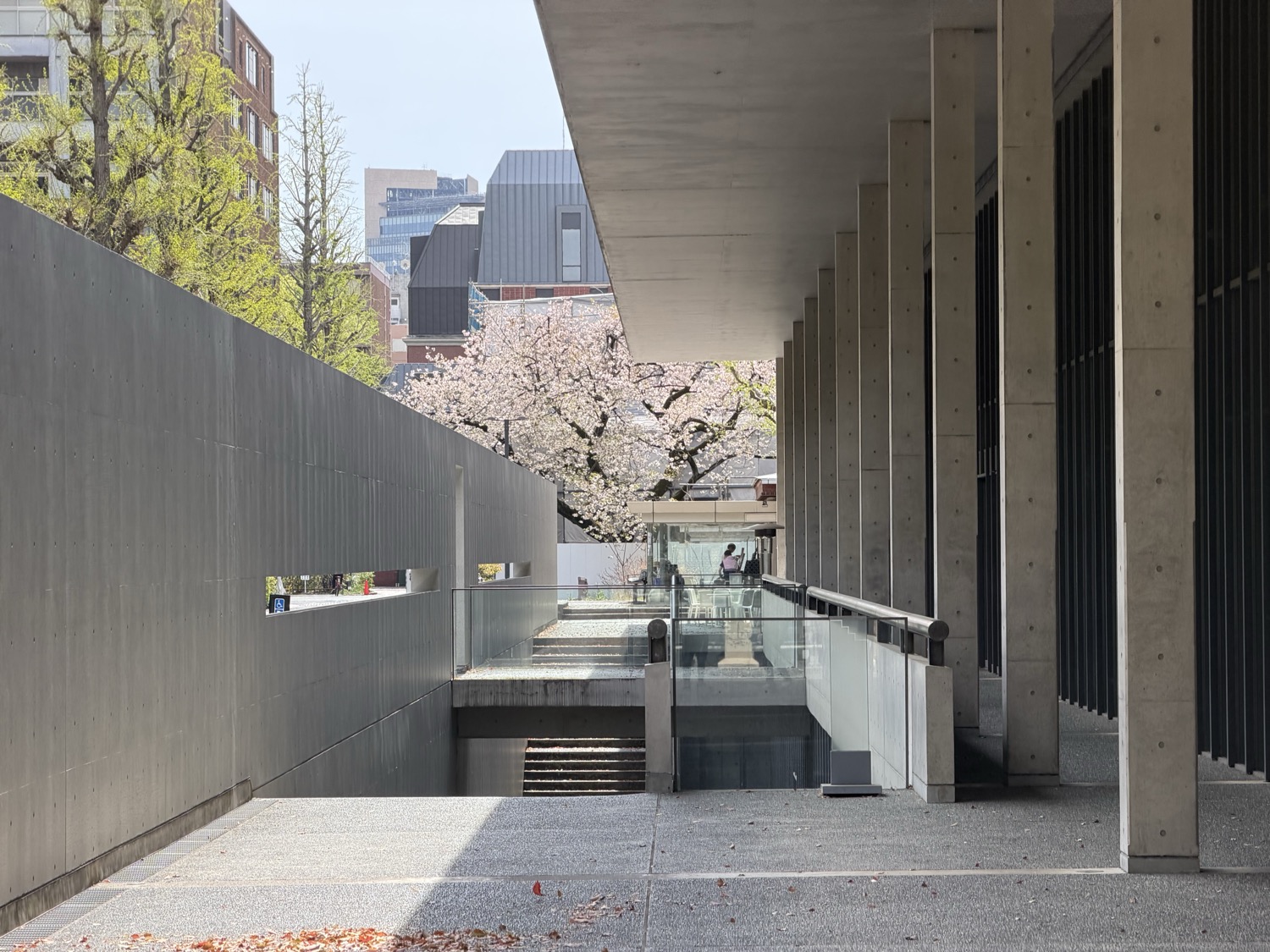
- The Nezu Museum, designed by Kengo Kuma, is worth a visit both for its architecture and its gardens. Note that it is closed on Mondays.
- The Prada building designed by Herzog & de Meuron is a must-see with its iconic geometric facade.
- The Dior store imagined by SANAA plays more with transparency and lightness, especially when lit up at night.
- The GYRE building, designed by MVRDV, regularly hosts small free exhibitions.


Yoyogi Park, Tadao Ando and the transparent toilets
After Omote Sando, head to Cat Street for a final dose of shops before reaching the toilets of Jingū Dōri Park, designed by Tadao Ando in a style very different from his famous raw concrete.
The route continues towards the Yoyogi National Gymnasiums, another major work by Kenzo Tange.
On the other side of Yoyogi Park, the transparent toilets by Shigeru Ban have become the most famous of the project. The transparent walls become opaque once the door is locked. However, it seems they close in winter because the technology does not withstand the cold and the walls remain partially transparent.
The toilets of Yoyogi Hachiman, designed by Toyo Ito, offer a more organic approach.


Shibuya and the latest series of architectural toilets
The route then passes by the toilets of Nabeshima Shoto Park, designed by Kengo Kuma, before reaching the famous Shibuya Crossing.
The itinerary continues towards the toilets of Ebisu Park, then those of Ebisu Station, Shibuya Higashi 3 Chōme, Ebisu East Park, and finally those of Hiroo East Park.
This final section concludes this walk through contemporary architecture and designer toilets in Tokyo.


Tokyo Toilet Project
For more information on the project’s 17 toilets, the official Tokyo Toilet Project website remains an excellent resource: Tokyo Toilet Project.
Perfect Days: the movie to watch after the walk
To extend the experience, it’s hard not to recommend Perfect Days.
The film pays tribute to Tokyo’s public toilets and, above all, to the people who maintain them daily. Behind the seemingly mundane subject lies a much deeper reflection on the city, habits, and the small daily rituals of Japanese life.
GPX and KML files to follow the route
To make the walk easier, you can download the files for this contemporary architecture itinerary in Tokyo:
- GPX
- KML (click on the three dots to the right of the title, an option will appear to download the KML file)
These allow you to easily follow the route on your phone, a GPS app, or a compatible smartwatch.
Other neighborhoods of architectural interest
Ginza and its unmissable contemporary buildings
If you wish to continue your discovery of contemporary architecture in Tokyo, Ginza is an excellent complement.
Conceived as a showcase of Japanese modernization since the Meiji era, the district retains a very elegant identity today. On weekends, Chuo Dori Avenue becomes pedestrian from 12:00 to 17:00 (October to March) and from 12:00 to 18:00 (April to September). At the sound of the Seiko House Ginza Clock Tower bell, traffic resumes in an organized manner, typical of the country.
Among the must-see sites, I recommend the following:
- The Hermès building with its glass brick facade designed by Renzo Piano is absolutely worth a detour. On the top floor, the free Maison Hermès Le Forum gallery regularly hosts interesting exhibitions.
- The recent Ginza Sony Park also offers several free exhibitions in a fairly original urban concept.
- The MIKIMOTO Ginza 2 chome Store, designed by Toyo Ito, immediately catches the eye with its sculptural facade.
- Finally, even though it is technically located in Chiyoda, the spectacular Tokyo International Forum designed by Rafael Viñoly remains a must-see. The immense glass and steel structure becomes particularly impressive at sunset.


University of Tokyo: between historic and contemporary architecture
The campus of the University of Tokyo (Todai) is also worth a visit for architecture lovers.
The site mixes several eras coherently. You will find there notably Akamon, the famous red gate dating from the Edo period, a survivor from the era of the shoguns (under renovation at the time of writing this article), as well as several historic institutional buildings inspired by Western Gothic architecture, but above all a few contemporary achievements, including Kengo Kuma’s Daiwa Ubiquitous Computing Research Building and Fukutake Hall designed by Tadao Ando.


Odaiba and the Yurikamome elevated line
For a complete change of atmosphere, head to Odaiba.
The automated Yurikamome elevated line crosses a much more futuristic and postmodern landscape. It runs without a driver and the experience is enhanced from the first car.
The crossing of the Rainbow Bridge offers impressive views of Tokyo Bay. The section between Toyosu and Shimbashi remains the most interesting, especially at sunset.
Even without getting off the train, the journey is already worth the detour.


More walk ideas for contemporary architecture lovers
If you like discovering a city through its architecture, you’ll also find other itineraries and articles dedicated to contemporary architecture here:
Leave a Reply