
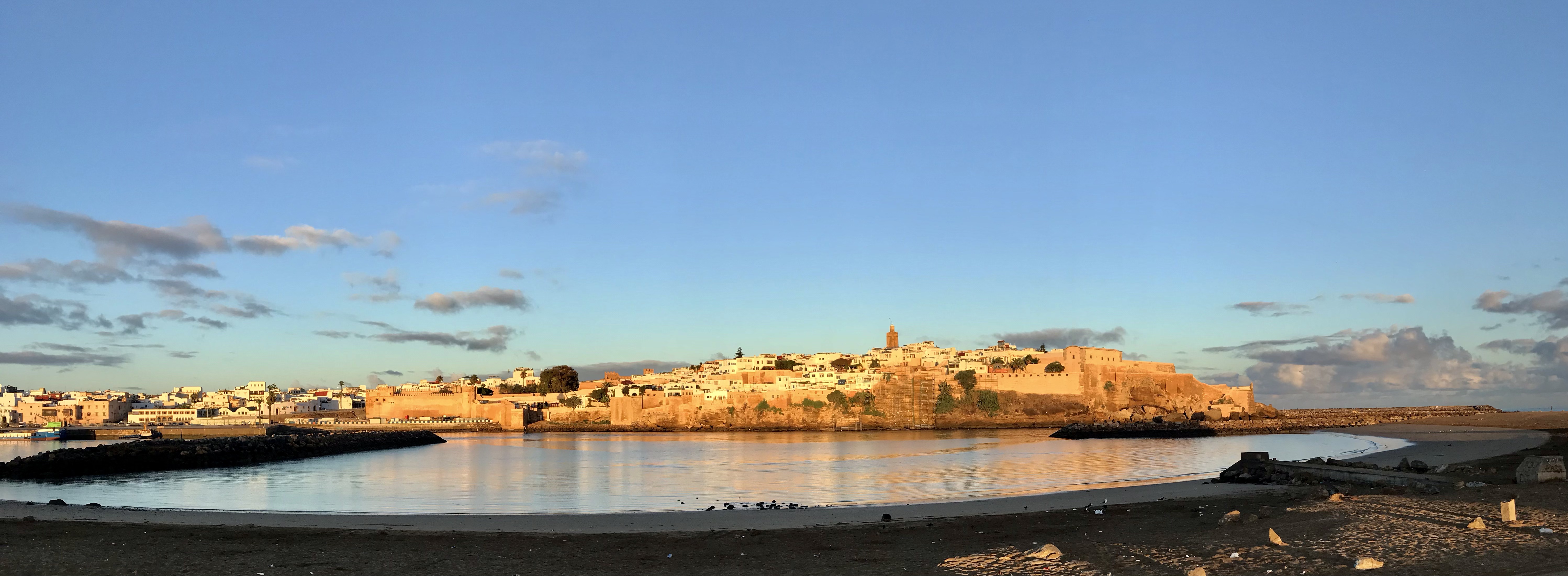
Far from the frenzy of Marrakech and the chaos of Casablanca, Rabat is well worth a stop on a trip to Morocco. The administrative capital of Morocco is a UNESCO World Heritage Site. If you wonder what to do in Rabat, you’ve come to the right place. The city has a pleasant medina, small museums, beautiful avenues lined with Art Deco buildings, and an old kasbah set at the mouth of the Bouregreg, where you can stop for tea.
The development program named “City of Light & Moroccan Capital of Culture,” launched by King Mohammed VI, reflects the country’s ambitions for this city. Rabat was also designated African Capital of Culture for 2022–2023.
I lived six years between Rabat and Salé and had the opportunity to explore the city inside and out. This guide therefore brings together my favorite spots, tips, and addresses, as well as a walking itinerary to discover the essentials of what the Moroccan capital has to offer.
So, what is there to do in Rabat? Here are the places and tips I would prioritize.


Overview
What are the must-sees in Rabat?
If you only have a little time, start with the Kasbah of the Udayas, its Andalusian gardens, and its Moorish café. Then cross the main arteries of the medina and stop to buy some Moroccan pastries. Finish at Avenue Mohammed V, in the Hassan district.
With a bit more time, the Chellah is really worth a detour!
The walking itinerary in Rabat, detailed later in the article, lets you discover many of the must-sees in less than half a day.
Visiting Rabat district by district
The Kasbah of the Udayas
An old 17th-century pirate hideout, the Kasbah of the Udayas is located at the mouth of the Bouregreg, facing Salé. It is a must-see in Rabat and an excellent starting point for visiting the city.
Its small size means you can explore it quickly. It is probably the only place in Rabat where some guides will insistently try to sell you their services.
Some may even claim that parts of the kasbah are closed but accessible if you go with them. Don’t be intimidated and explore the alleys freely.


To start, go through the Oudayas Gate, located at the top of the monumental staircase along the wall.
Then find your way to the panoramic terrace, which offers beautiful views of the ocean. Below is Rabat beach, where you can surf.
From there, retrace your steps and take one of the small streets going down on your left. It will lead you to the Moorish café, a true Rabat institution.
There you can sip a very sweet tea and enjoy a pastry on a terrace overlooking the Bouregreg. When you enter the terrace, don’t hesitate to go farther into the café. After the toilets on the left, the view from the second terrace is worth it.
Once you’ve had your fill, take time to enjoy the atmosphere of the Andalusian gardens. Then leave through the small door that will bring you back to the foot of the monumental staircase.
Finally, cross the street and take Rue des Consuls, the shopping artery that leads into the medina of Rabat.
The medina of Rabat
The historic heart of the city, the medina of Rabat is much less touristy than those of Fez or Marrakech. Rabatis are nevertheless used to seeing foreigners there, since you are in the country’s administrative capital.
You can therefore stroll there more peacefully, without necessarily being pulled in at every corner.


Rue des Consuls
Rue des Consuls, once home to foreign diplomats, is full of Moroccan craft shops. It is probably one of the best places in Rabat to buy souvenirs.
If you have a little time, you can normally make a detour to the Oulja craft center, located in Salé and specializing in pottery. The site is currently being relocated, however, and the temporary location unfortunately isn’t really worth the detour, since most workshops are at a standstill. When the new center is fully operational, it should become an interesting visit again, especially since prices there are significantly more reasonable.
At the top of Rue des Consuls, a small square marks the beginning of the mellah, the old Jewish quarter. There you can enjoy fried fish at reasonable prices. Above all, don’t miss the maâkoudas, those potato fritters.
Rue Souika
From this square, take Rue Souika. It begins with the babouche souk before becoming an authentic street lined with shops where Rabatis come for their daily shopping.
Not far from Rue Souika, the Halawiat Sbai pastry shop is, in my opinion, the best in Rabat. If you like almonds, ask to try their Moroccan macarons: they are delicious.


From these two arteries, I recommend getting lost in the medina and enjoying the atmosphere there.
You can also continue your visit to the Hassan district, especially if you’re looking for more architecture and culture.
Hassan district
The Hassan district, the cultural heart and city center, is a must-see stop if you like architecture and culture.
The district’s urban plan was established by architect Henri Prost, commissioned by Hubert Lyautey, resident-general of the French protectorate in Morocco in the early 20th century.
Avenue Mohammed V
Avenue Mohammed V is its main artery. Lined with Art Deco buildings, it overlooks the medina and connects it to the Assounna Mosque, located next to the royal palace. Lined with colonial institutions, it symbolically reflects, in my view, France’s ambitions for modernization and power over Morocco.
Among the most emblematic Art Deco buildings, here are the ones I recommend looking at:
- Rabat-Ville train station, which caused controversy after the addition of a large metal structure. Fortunately, it has since been demolished and replaced.
- The Grand Post Office, easily identifiable by its large clock. It also contains a museum.
- Bank Al-Maghrib, whose ochre stonework is particularly beautiful when the late-day sun lights it. The building also contains a museum.
- Parliament;
- Saint-Pierre Cathedral.


Hassan Tower & Mausoleum of Mohammed V
The Hassan Tower, a true emblem of the city, is one of the must-do visits in Rabat. It is the remnant of a grandiose unfinished 12th-century mosque.
Its minaret was supposed to exceed 60 meters, but construction was interrupted at 44 meters when its patron, Sultan Yacoub El Mansour, died. The mosque was heavily damaged during the 1755 earthquake, which destroyed Lisbon.
It was only in the 20th century that Moroccan and French archaeologists undertook the renovation of the site you can visit today.


In the 1960s, the Mausoleum of Mohammed V was built. Although designed by a Vietnamese architect, it is a true jewel of Moroccan architecture and craftsmanship.
Its construction required 400 artisans over ten years. The mausoleum houses the tombs of Mohammed V and his two sons, King Hassan II and Prince Moulay Abdallah.
Unlike the adjacent mosque, the mausoleum can be visited inside.
What are the best museums to visit in Rabat?
For museum lovers, Rabat holds some nice surprises. Most are concentrated in the Hassan district.
If you’re looking for what to do in Rabat on the cultural side, here are the institutions I would prioritize depending on how much time you have:
- Mohammed VI Museum of Modern and Contemporary Art – If you have to choose one museum, I recommend this one. The permanent collection of mainly Moroccan artists is one of the most complete in Morocco. Temporary exhibitions also offer nice surprises. Allow at least an hour for the visit. The ticket also gives access to the archaeological museum.
- Museum of History and Civilizations – This small museum gathers artifacts from prehistory to the Islamic era. It is particularly interesting if you have visited Lixus or Volubilis.
- Bank Al-Maghrib Museum – A combination of an exhibition on the history of banking in Morocco and the art collection of the Bank Al-Maghrib foundation.
- Barid Al-Maghrib Museum – The postal museum.
- Villa des Arts – Small exhibition space in a beautiful villa. However, there are few exhibitions.
- “Espace Expressions CDG” art gallery – A small free-access space worth a quick stop if you pass Place Pietri.
Cinemas and theaters
In addition, several cinemas and theaters are grouped around the city center, including:
- Cinéma Renaissance – A meeting place for film lovers, this cinema has a single screen and regularly shows arthouse films or festivals. The café upstairs is regularly used for concerts.
- Cinéatlas/Colysée – With its 4 comfortable screens, this cinema is probably the newest in the city center. You can see most new blockbusters and some Moroccan arthouse films there.
- Mohammed V Theater – Rabat’s main theater (while waiting for the Grand Theater of the Bouregreg Valley to open). For tickets, go to their official website, ticket.ma or guichet.com
The Chellah
If you like history and quiet, the Chellah is one of the best visits to make in Rabat. This place brings together several archaeological layers of the city’s history in a magnificent setting. It is the only place where you can still observe the ruins of the Roman city Sala Colonia, located on the banks of the Bouregreg.
In the 14th century, the Marinids established a necropolis there surrounded by an ochre wall, which can still be seen today.


If you want to visit the Roman ruins and the various buildings of the necropolis, including the mosque and the hammam, you must pay the entrance fee.
However, you can also enjoy the view over the Bouregreg Valley by following the wall on the outside along a well-maintained path of about 1.5 km, with several staircases.
Finally, ask the guards at the entrance of the Chellah whether there are stray dogs (kelb in Darija) in the area. Some can sometimes be aggressive.


Visit to the royal palace
It is also possible to enter the grounds of the Royal Palace, Dar al-Makhzen, located near the Chellah.
As a foreigner, however, you must bring your passport and use the entrance on Avenue Yacoub Al Mansour. The visit is limited to the méchouar, the square in front of the palaces, from where you can observe the palace façade from a distance.
In my opinion, this visit is not very interesting, and if you only have a little time, I would prioritize the other things to do in Rabat.
The Ocean district
The Ocean district is adjacent to the medina and remains rather off the beaten path.
Walking around the area is relatively uninteresting. However, the coastal road has a long sidewalk along the sea, pleasant outside rush hour.
The district also has a basic and authentic street market. It gives a glimpse of the daily life of many Rabatis.
I especially recommend a quick stop at the photography museum, housed in Borj El Kebir, an old 19th-century Portuguese fort. It hosts small temporary exhibitions that can sometimes go against Moroccan customs or even laws.
If you’re looking for souvenirs and your budget allows, the concept store 17 Océan offers Moroccan crafts in a pleasant setting.
The Bouregreg Valley
At the junction between Rabat and Salé, the Bouregreg Valley was until recently mainly fields and pastures.
With Rabat’s development program, this valley is now the subject of futuristic and ambitious real estate development. It began in particular with the construction of the Grand Theater by architect Zaha Hadid, followed by the Mohammed VI Tower.


Walking itinerary in Rabat: the must-sees in half a day
If you don’t want to think too much about what to do in Rabat, I recommend following this walking itinerary. It lets you discover the city’s main sites in half a day. I also suggest a few options to extend it.
Itinerary map

Itinerary details
Kasbah of the Udayas
Start with the unmissable Kasbah of the Udayas and its Andalusian gardens (1). Then enjoy tea and a pastry at the Moorish café (2), then head to the panoramic terrace (3).
From this terrace, you can extend the walk by going down the stairs toward Rabat beach. Then continue to the photography museum (A).
Medina
Otherwise, retrace your steps and exit through the gate at the top of the kasbah. Cross the street to reach the medina via Rue des Consuls (4) and its souvenir shops. Halfway along, two renovated fondouks are on your left.
At the top of Rue des Consuls, make a detour to the square on your left to taste a maâkouda, a potato fritter.
Then take Rue Souika (5). It begins with the babouche souk before becoming a shopping artery where locals come for their daily errands.
Make a detour to the Halawiat Sbai (6) pastry shop to buy some Moroccan macarons. Then return to Rue Souika before leaving the medina.
Hassan district
You will then come out onto the large Avenue Mohammed V. There you will see in particular the post office, Bank Al-Maghrib and the telecommunications building (7), then Parliament and the train station (8).
From the train station, you can extend the route by visiting the Mohammed VI Museum of Modern and Contemporary Art (B) or the Chellah (C).
Otherwise, head to Saint-Pierre Cathedral (9). Then continue to the Hassan Tower and Mausoleum of Mohammed V (10).
Rabat & Salé Marina
Finally, reach the roundabout and go down toward the Rabat Marina, along the Bouregreg. There you can have tea or a beer at Dhow.
If you still have energy, take a boat for a few dirhams to the Salé Marina (D) or the Salé medina (E). Simply ask to cross and wait for the boat to fill up.
Where to eat and have a drink in Rabat?
For low-cost eating, the most affordable option remains street food, especially around the central market of the medina.
However, if you’re looking for a restaurant, here is a selection of my favorite addresses to complete your program after your visit.
- Dar Naji € – Traditional Moroccan, kitschy but pleasant setting.
- Le Petit Beur €€ – Moroccan fusion. Alcohol available.
- Ty Potes €€ – Breton crêperie in a small garden where turtles roam. Several vegetarian options. Alcohol available.
- Giardino €€ – Italian restaurant in a pleasant patio/garden. Alcohol available.
- Cosmopolitan €€€ – Fine dining. Alcohol available.
- Sufra €/€€ – Palestinian run by a welcoming family.
- Yamal Acham € – Small Syrian restaurant chain.
- La Mamma €€ – Italian. Alcohol available.
- Casa José €€ – Spanish. Alcohol available.
- Espace Hassan € – Pleasant small courtyard to stop for tea.
- Boho Café €€ – Very good brunch. Several vegetarian options.
- Bistrot du Pietri €€ – Restaurant bar with a live band. Alcohol available.
What to do around Rabat?
To extend your stay, I also recommend visiting the medina of Salé, which remains largely off the beaten path.
Several beaches north and south of Rabat are easily accessible by car. For surfers, I particularly recommend Plage des Nations. For swimming, Bouznika beach is a good option. It is a fairly international beach where you won’t stand out if you want to swim in a swimsuit. However, it can be particularly busy in summer.
Finally, don’t hesitate to check Google Maps to locate the different beaches along the coast and choose the one that best suits your desires.


Practical tips for visiting Rabat
How much time should you plan for Rabat?
Rabat deserves a day on its own if you are passing through. However, don’t hesitate to spend more time there to soak up the atmosphere.
With one day, you can already discover the city’s main must-sees. With more time, you can visit some museums, explore the medina more peacefully, or make a detour to Salé.
How to get to Rabat?
The city is very well served by train. Rabat Ville station is right in the center, while Rabat Agdal TGV station is about ten minutes by taxi from the center.
Rabat is also accessible by bus. The bus station is a little farther from the center. However, the departure point may vary depending on the company chosen.
How to get around Rabat?
Several major sites are fairly close. You can therefore organize much of your visit on foot, especially between the Kasbah of the Udayas, the medina, and the Hassan district.
Small blue taxis, which take a maximum of three people, make it easy to get around the city. They have a meter and are very affordable. However, remember to ask the driver to turn on the meter to avoid unpleasant surprises.
Grand taxis (usually white) are significantly more expensive and do not have meters, and unless you share them, I advise against taking them.
The two tram lines are also practical for crossing Rabat or reaching Salé.
What is the best season to visit Rabat?
Rabat enjoys a pleasant climate all year round. Summer is generally more bearable than inland, while winter remains mild despite a few cool nights.
However, the risk of rain is higher between mid-October and mid-April. To make the most of walking visits, the most pleasant periods are therefore generally spring and early autumn.
To continue your trip in Morocco
If you have time to explore other regions, also discover my other Morocco guides. After living there for six years, I share all my tips to keep discovering the kingdom, between road trips, hikes in mountain ranges, magnificent beaches, and city visits.
Find the complete list of my articles devoted to Morocco on this page: Morocco.
Leave a Reply