
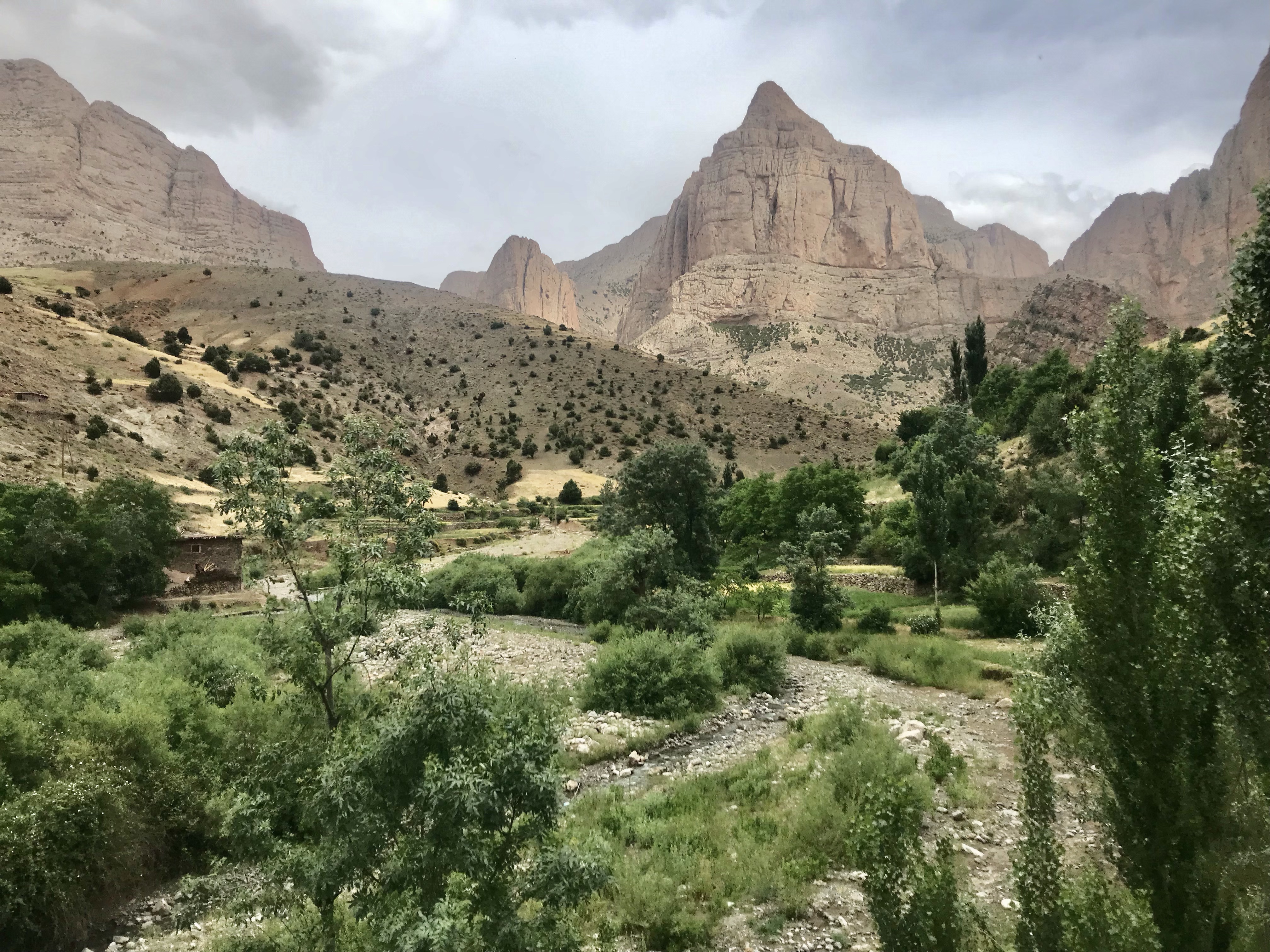
Want to disconnect and get some mountain air? I suggest a 9-day loop in the Moroccan High Atlas, including the ascent of Ighil M’Goun, which culminates at 4,071 meters. An ideal itinerary for nature lovers and sporty adventure, between Berber valleys, gorges, high plateaus and summits.
I did this hiking itinerary in the High Atlas in late May 2021, by SUV from Rabat. It combines several accessible walks, village discovery and a 4-day M’Goun trek with a guide.
Overview
9-day itinerary in the Moroccan High Atlas
DAY 1 – Rabat to Imsfrane
This first day of the High Atlas road trip is mainly spent driving, with a stop in Béni Mellal before reaching Imsfrane. We pass through the following places:
- The Ain Asserdoun spring (a pleasant small park with access to a kasbah overlooking the Beni Mellal plain;
- Stop at villa restaurant lounge, a restaurant run by a Frenchman where the food is good;
- After Beni Mellal, the road climbs toward the Bin El Ouidane dam and offers beautiful scenery up to Imsfrane;
- Last gas station at Ouaouizeght before entering the Atlas (sometimes empty, so remember to fill up in Beni Mellal).
Accommodation: few choices in Imsfrane. We opted for the auberge at Imsfrane Cathedral. Only tents were available (we were glad it didn’t rain at night). The accommodation has a lot of potential, but it felt like it was still under construction. 200 MAD/person half board.
https://goo.gl/maps/t3TKLebJMCXbpVfM
DAY 2 – Imsfrane to Zaouiat Ahansal
Ascent of Imsfrane Cathedral
We then drive closer to the Imsfrane Cathedral, an impressive rock dominating the landscape. From its base, we start this first hike in the High Atlas, despite the heat and humidity. Fortunately, a good trail leads us to the summit.
Another access point, behind the cathedral, allows you to drive closer and reach the summit in a short time. As a result, expect to meet other people there.
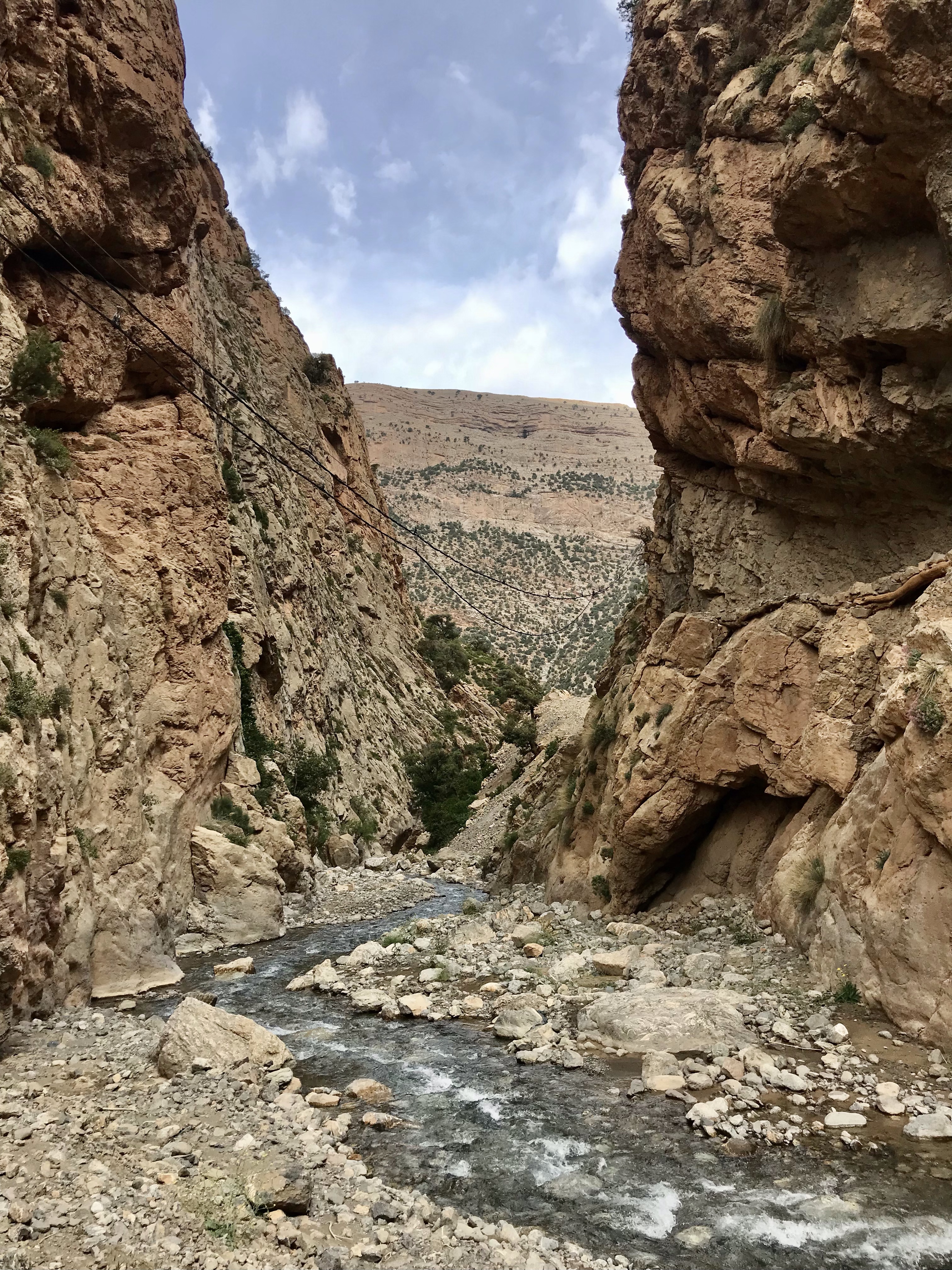
We then descend via another flank toward the Oued Ahansal gorges. This was probably our favorite part. A small trail leads to a waterfall in the heart of the gorges. However, this descent requires crossing the oued (the river) and therefore depends on the water level. Ask for information beforehand before committing.
Finally, for the more adventurous, it seems possible to continue exploring farther into the gorges, swimming in some places, or to venture toward the waterfall.


Rafting was possible (late season), but given the low water level and feedback from other tourists, we preferred to save this activity for another year.
Route to Zouiat Ahansal
The track to Zaouiat Ahansal is splendid. A car with fairly high ground clearance is recommended: our Peugeot 3008 was perfect. Ask about the road conditions, which then alternated between track and sections under construction, as well as the weather. Avoid this route in case of thunderstorms or heavy rain. Once there, ask accommodations or locals for advice rather than relying only on online forecasts.
Accommodation in Zaouiat Ahansal
We stayed at Dar Ahansal, a nicely decorated accommodation with very pleasant terrace lounges. Good meals. Call directly or send an email to book. 900 MAD for a triple room with full board.
https://goo.gl/maps/hBEK9jY7Y6P9zUvt8
DAY 3 – Dar Ahansal to Ait Bouguemez
We start the day with a visit to the Zaouiat Ahansal souk, held on Mondays. Then we continue on a narrow track to the entrance of the gorges, where a small area allows you to park the car before setting off on foot toward Taghia.
Hike to Taghia and the Berber Passage
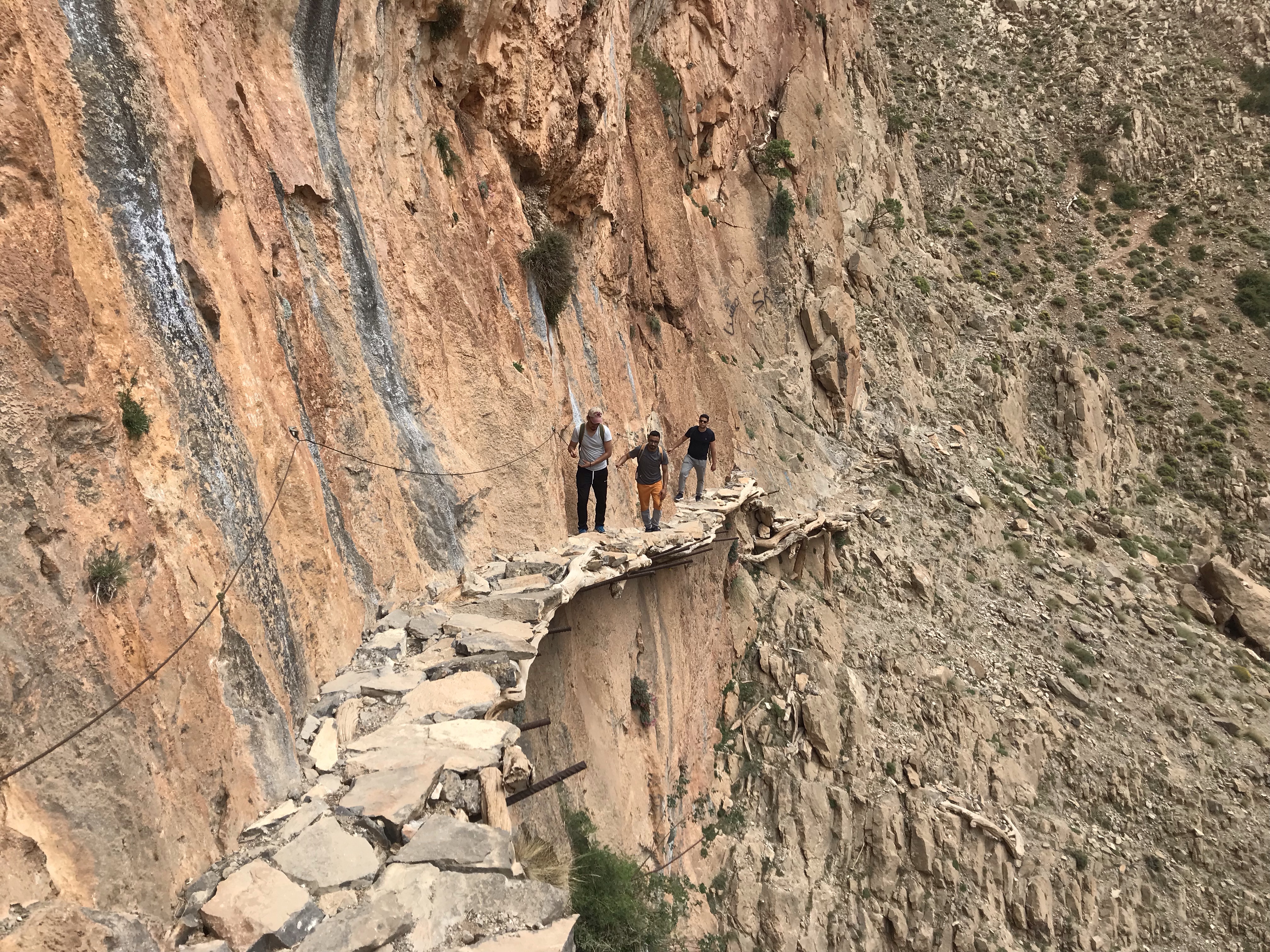
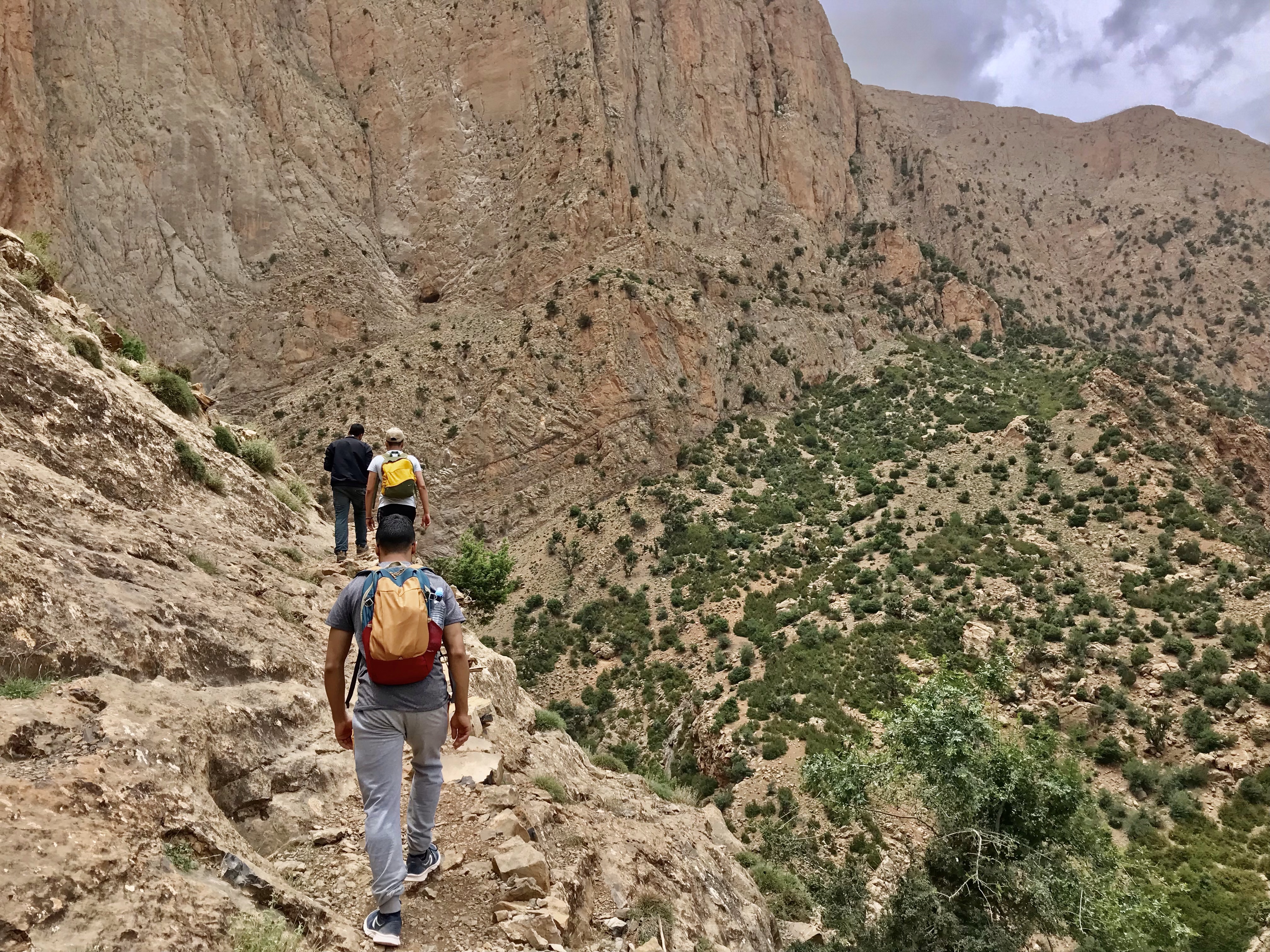
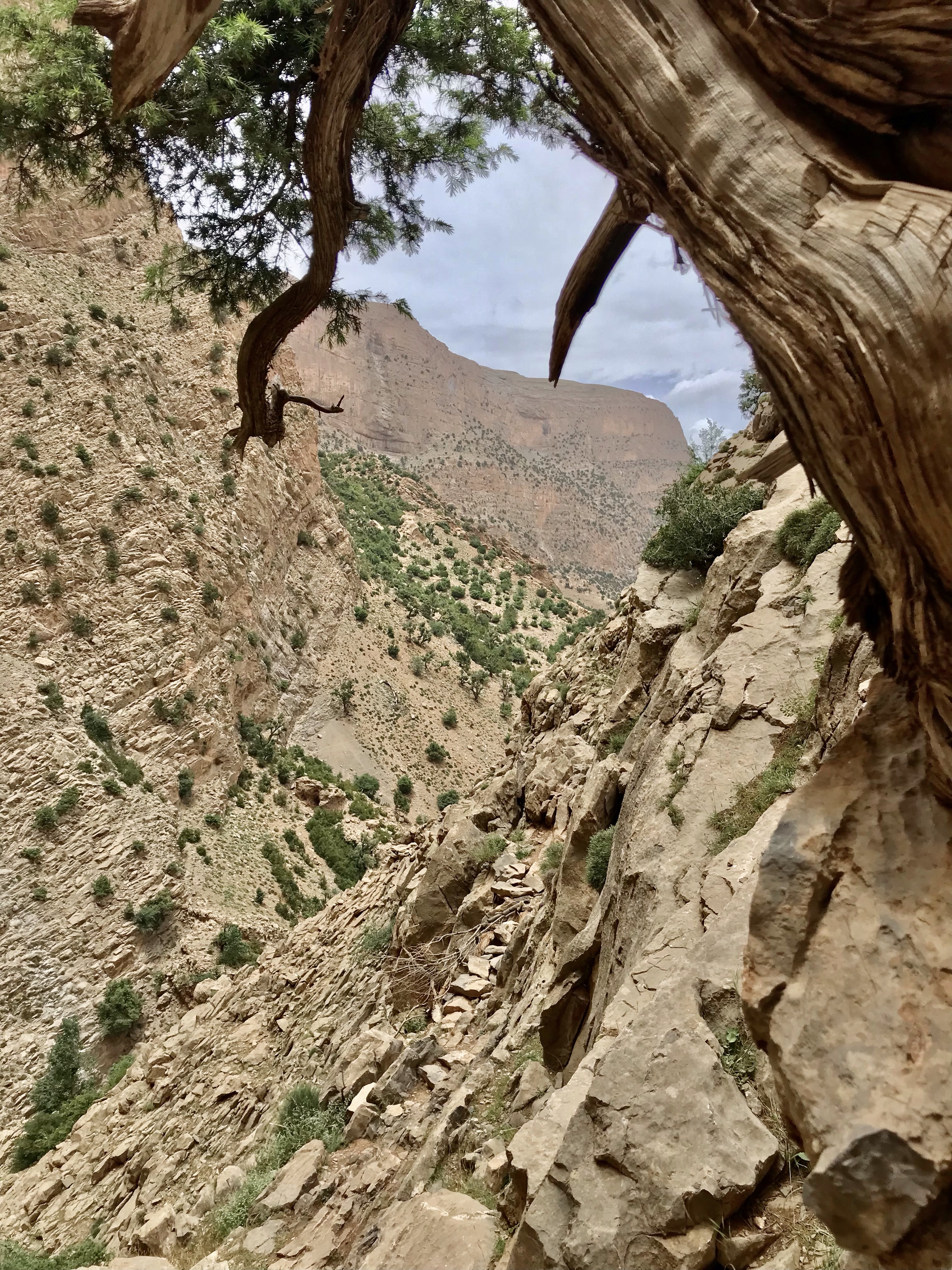
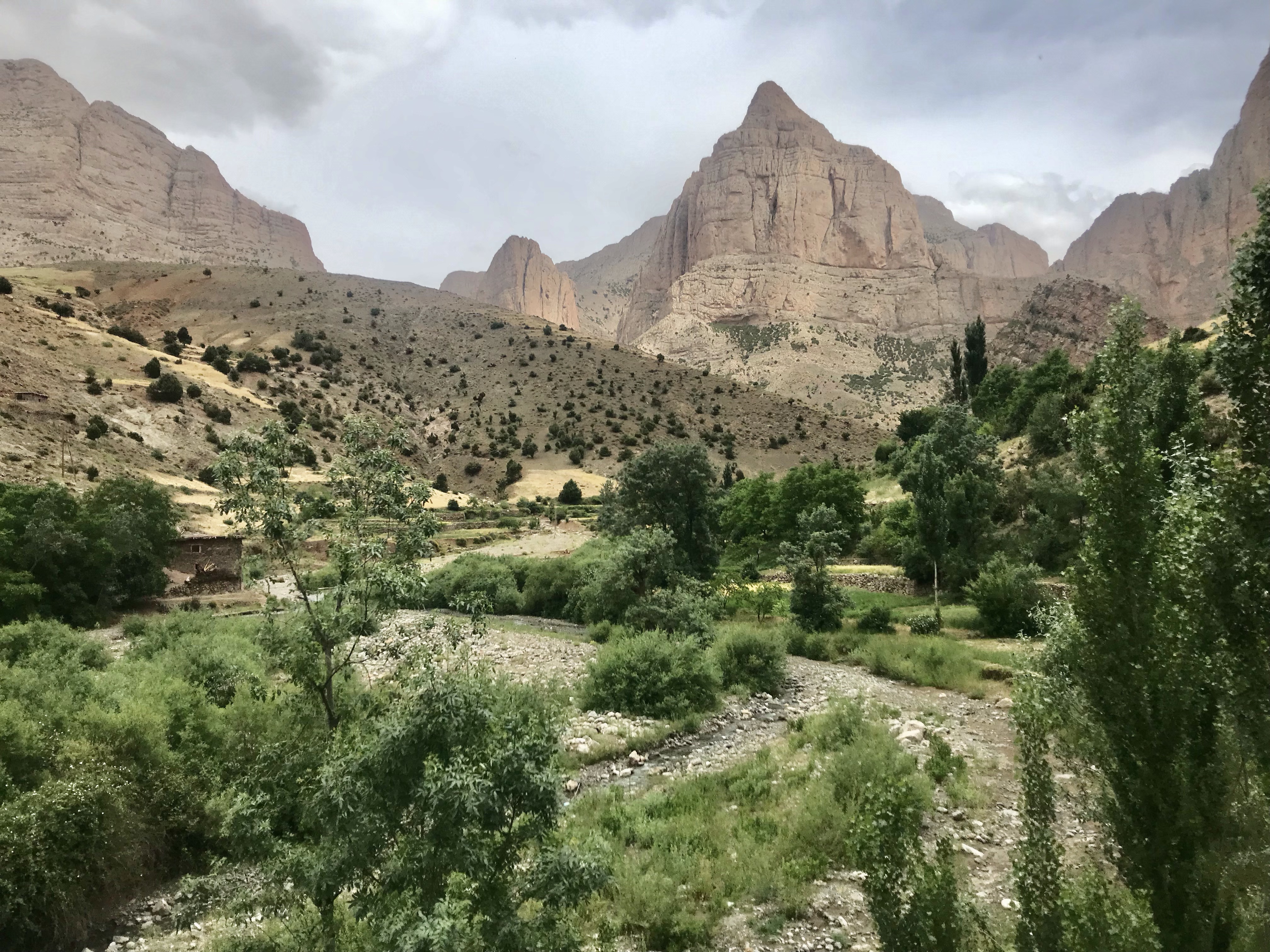
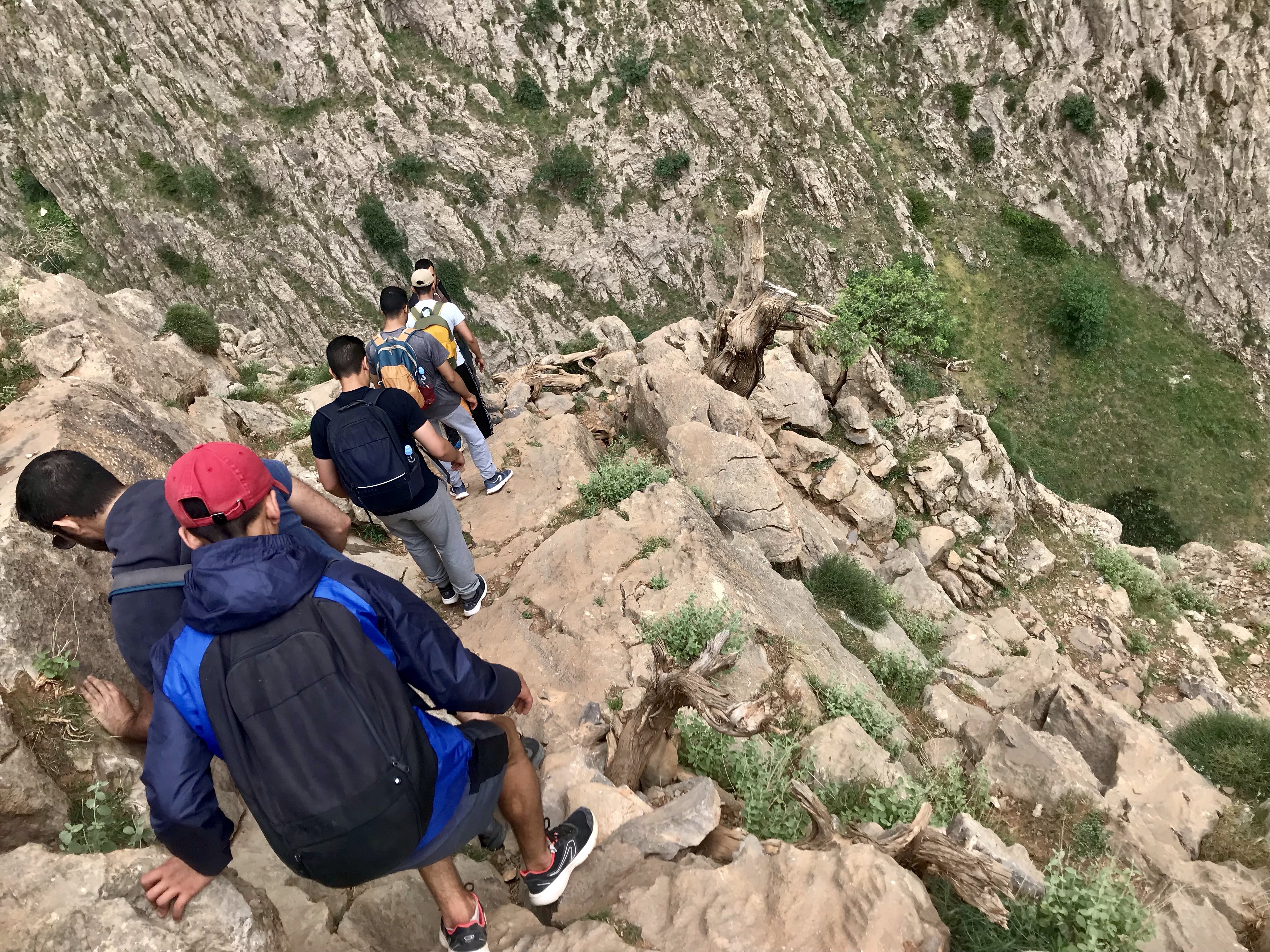
The walk to the village is easy and particularly beautiful. However, since my visit, a road has been built, slightly changing the landscape. Fortunately, beyond the village, the trail remains spectacular. It climbs gradually, and some sections require using your hands. The cliffs around us are impressive! We continue this way to the Berber passage, before turning back.
For this section, taking a guide is recommended. We first took the old path before finally calling one. I recommend going through Jamal, whose phone number is available on Google Maps: Gîte Jamal Taghia. If you have time, don’t hesitate to spend the night here!
From the village of Taghia, it is possible to go climbing in several places.

Route to Aït Bouguemez
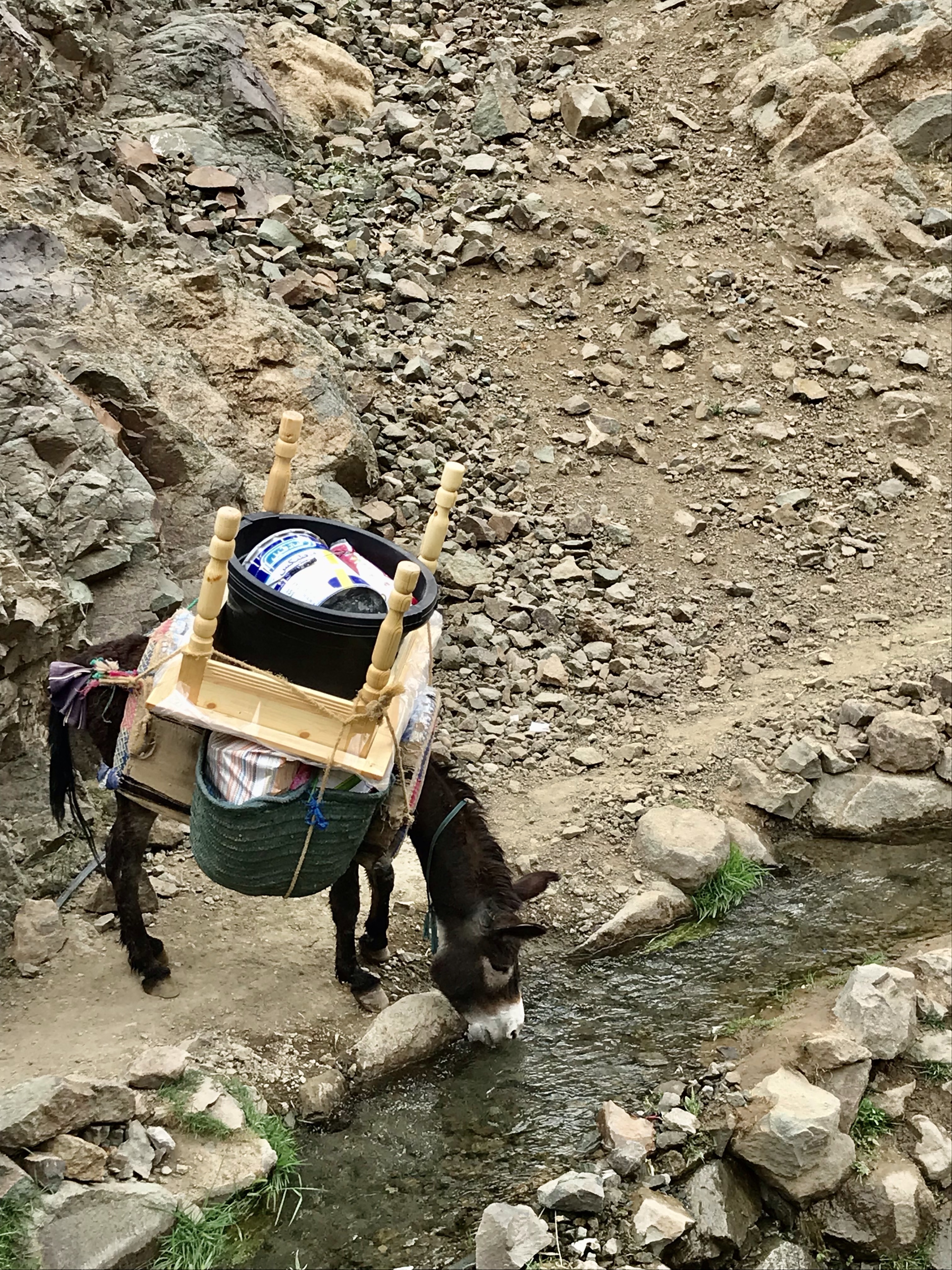
We then take the good (and magnificent) road leading to the start of the Aït Bouguemez valley. Along the way, we come across camels at an altitude of around 2,000 m! They belong to nomads who, as summer approaches, come looking for cooler air and pastures for their livestock in the mountains.

Accommodation in Aït Bouguemez
We stayed at Touda Ecolodge, a guesthouse overlooking the valley. We were very well received by this French-Moroccan couple, who readily share good advice and hiking recommendations in the area.
During our visit, the rooms and pool were still being renovated or built. I recommend calling directly to book.
Expect 1,500 MAD for a triple room with full board. However, the valley also has many other accommodations, including cheaper options.
https://goo.gl/maps/9ed5iRnVAvdRe8dG8
DAY 4 – Dried-up Izourrar Lake
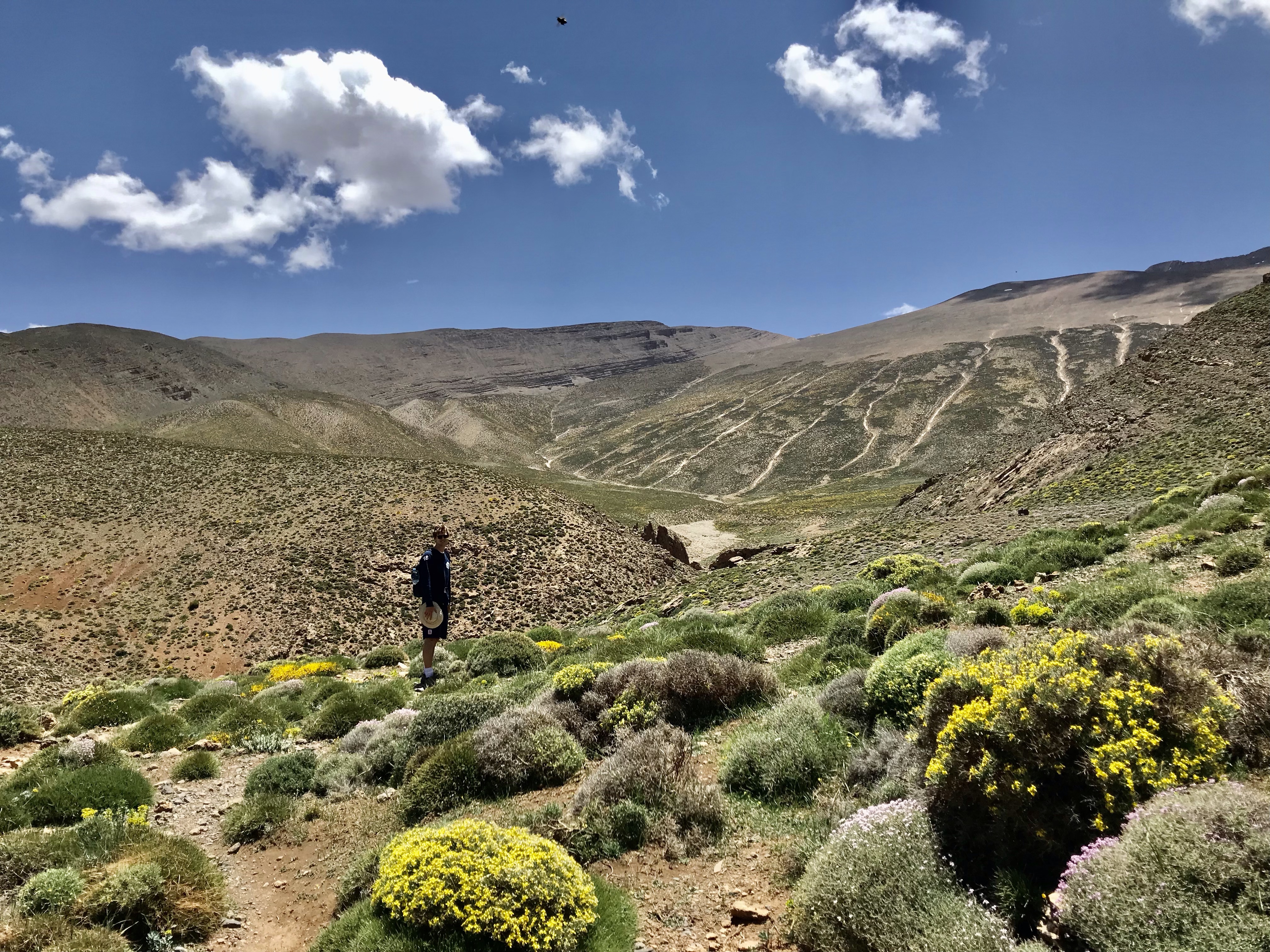
This easy hike in the Aït Bouguemez valley starts directly from the ecolodge. During our visit, mountain flowers were particularly abundant along the path, making the walk even more pleasant.
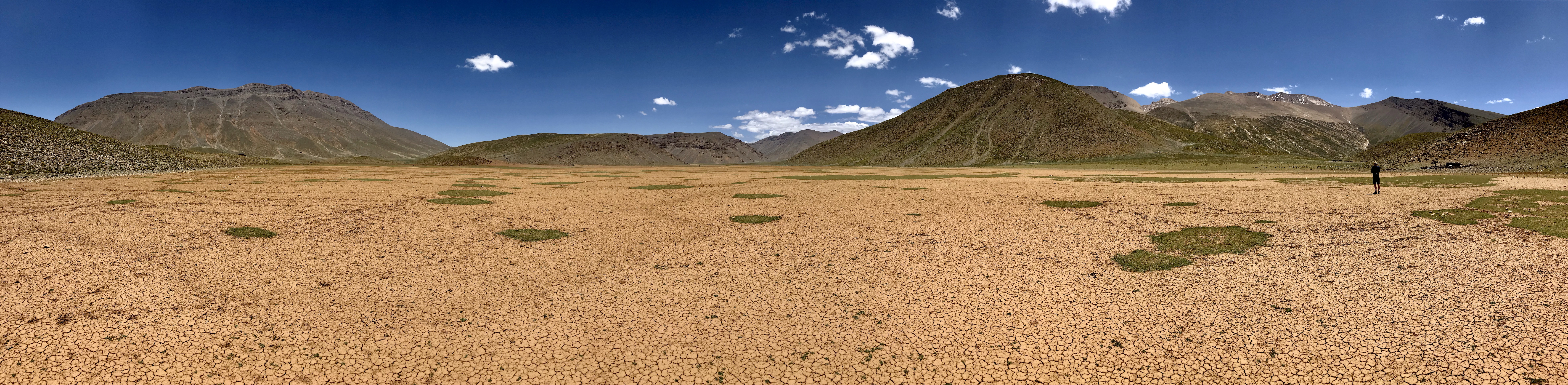
Near the dried-up Izourrar lake, a nomad kindly invited us to share tea. A small contribution is nevertheless welcome in exchange for this hospitality.
Be careful on the way back, though: we got a little lost. To avoid the off-trail detour visible on the Wikiloc track, ask Saïd to explain the route to you again before setting off.


DAY 5 – M’Goun ascent – from Arousse to Ikkis
After one last good night’s sleep before the M’Goun ascent, we drive toward Arousse.
https://goo.gl/maps/y412kMpzA77ztkZz6
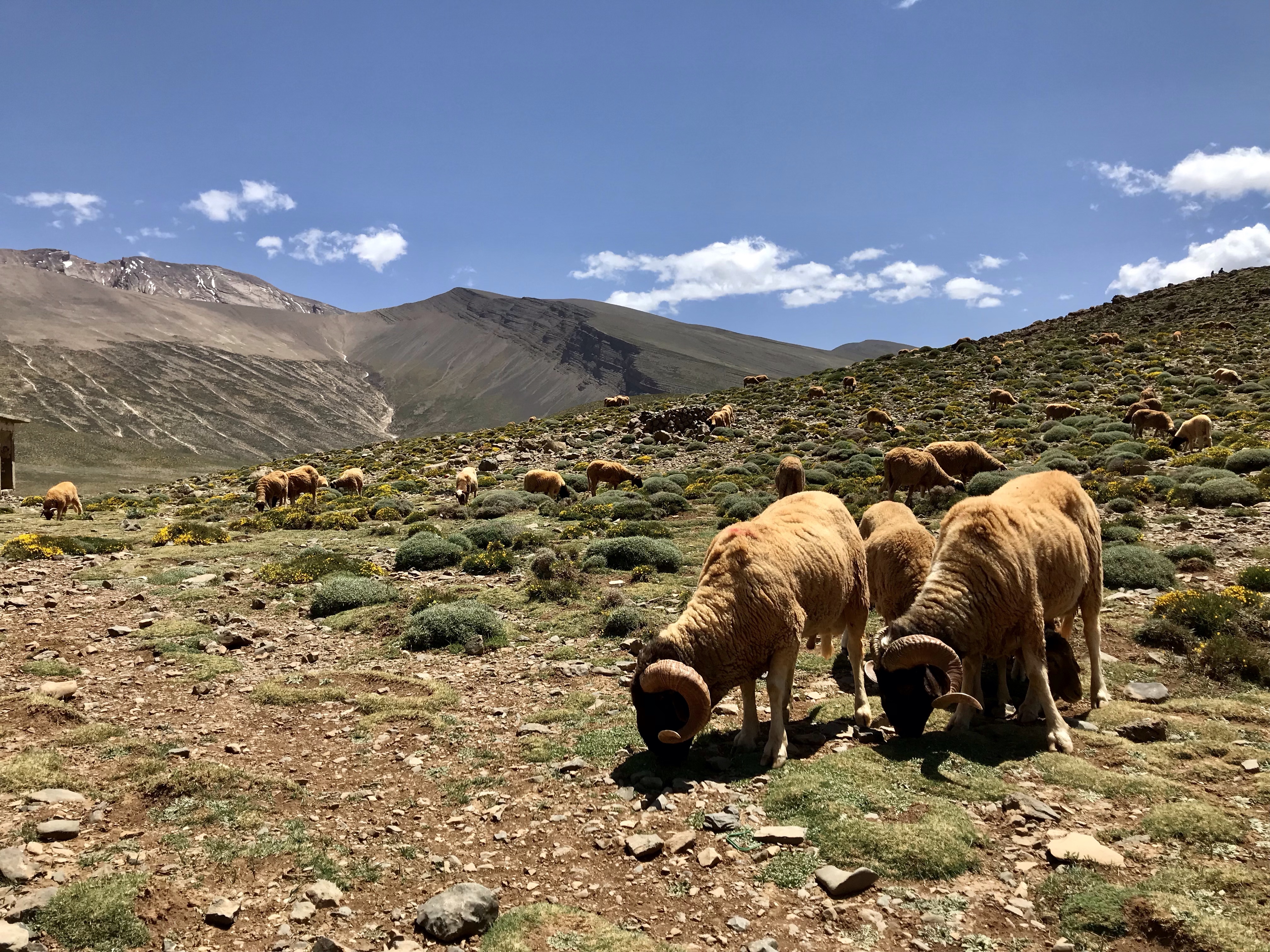
Our guide, Abdou, is waiting there for lunch. We then start the M’Goun trek on foot and walk to just beyond the Ikkis sheepfolds, where we set up bivouac.
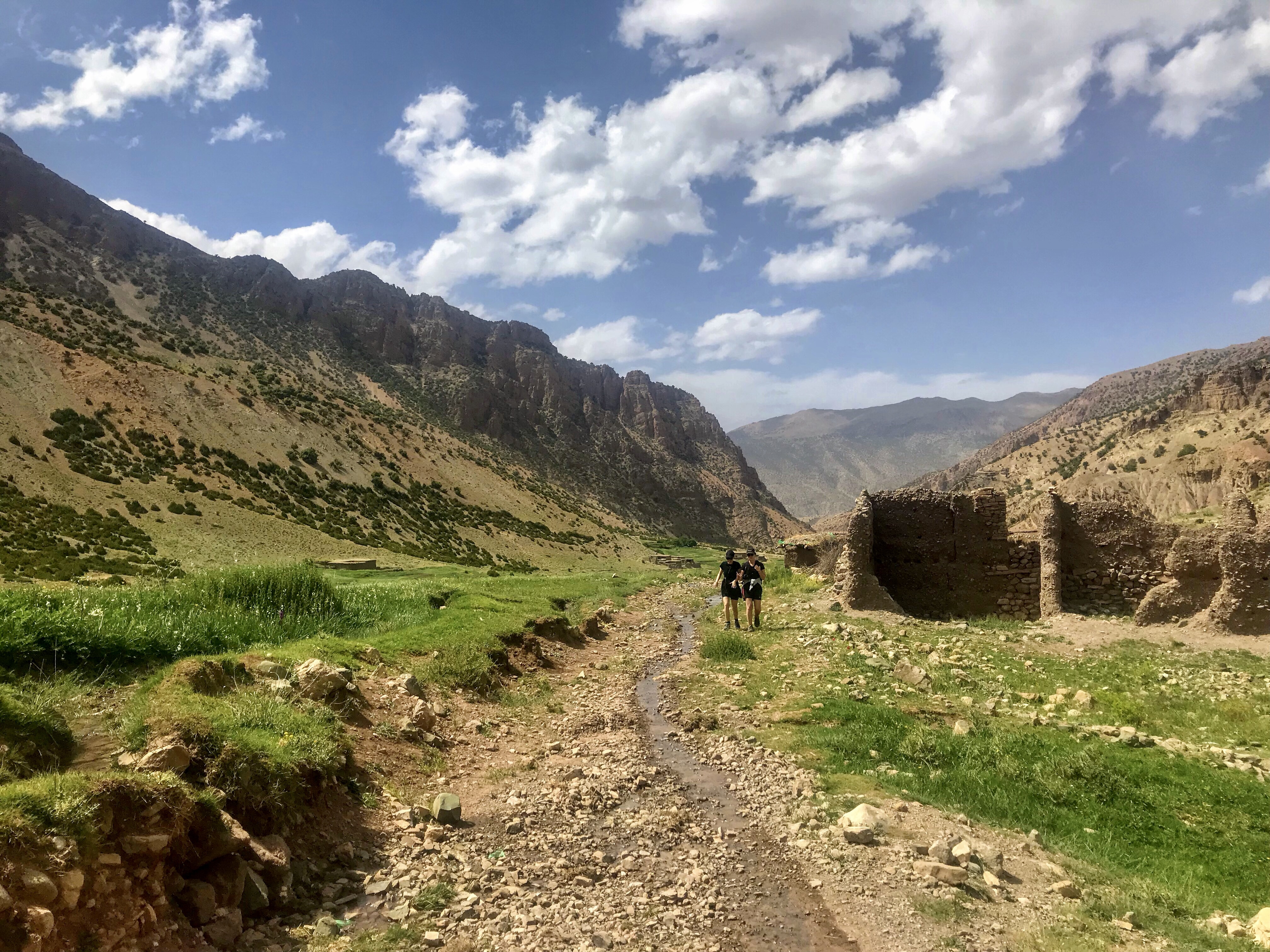
DAY 6 – M’Goun ascent – from Ikkis to Tarkedit refuge
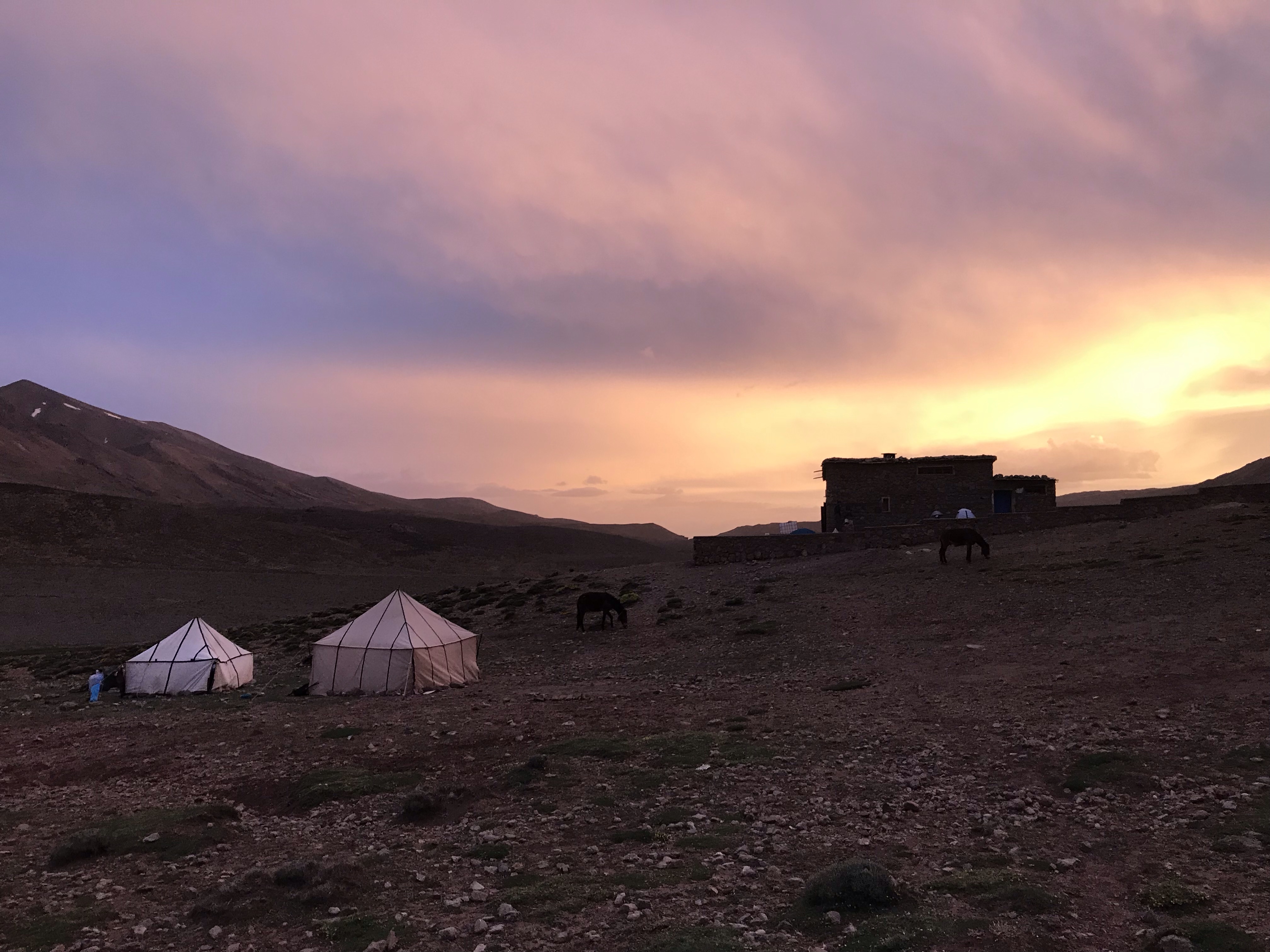
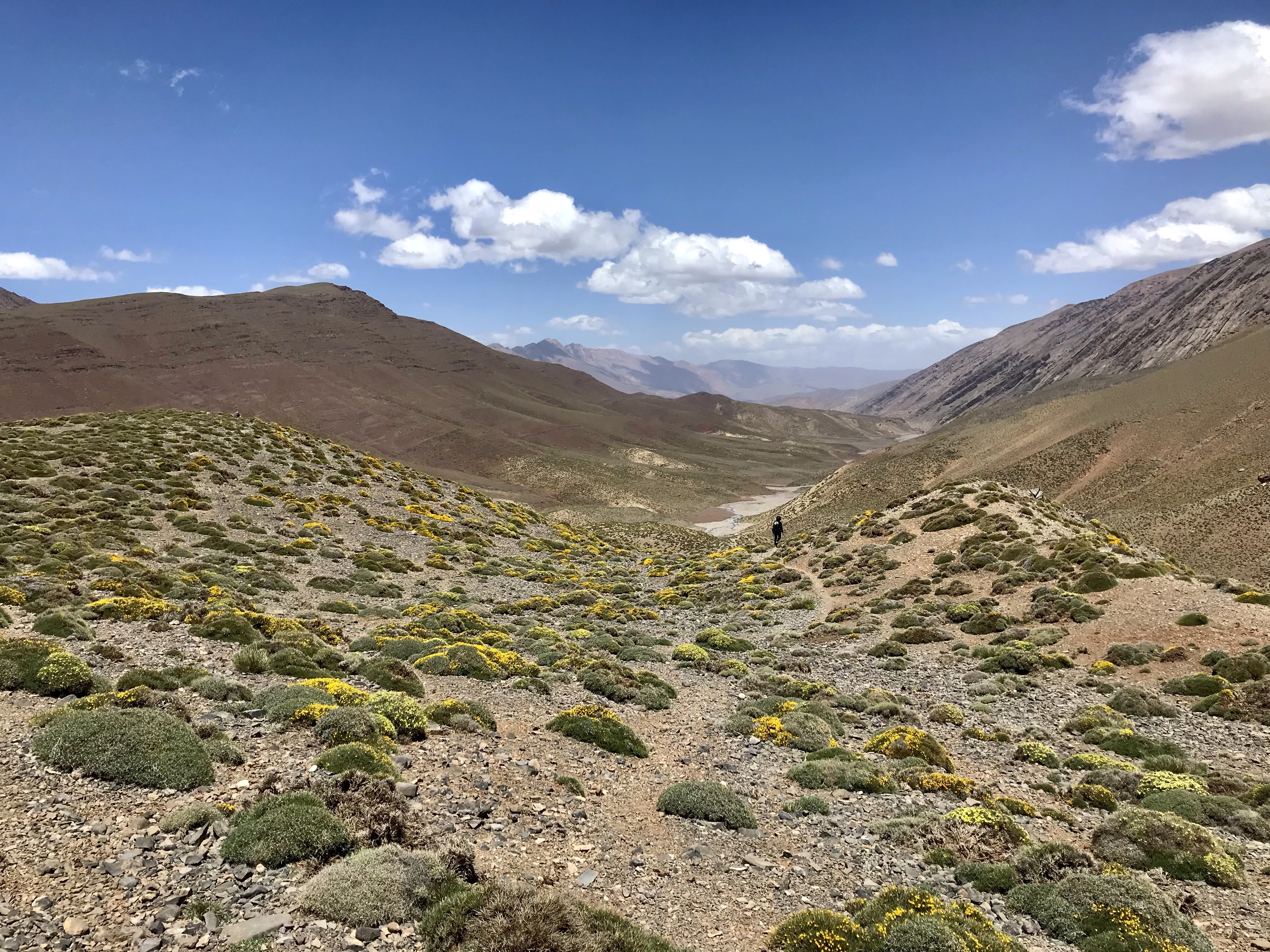
After a particularly windy night (earplugs are welcome!), we pack up camp and begin the ascent of the Tarkedit pass, located at 3,400 meters altitude. We then descend to the plateau, where a basic refuge is our stop for the night.
Thus, this day of the M’Goun trek allows you to gradually gain altitude while acclimatizing before the summit ascent.
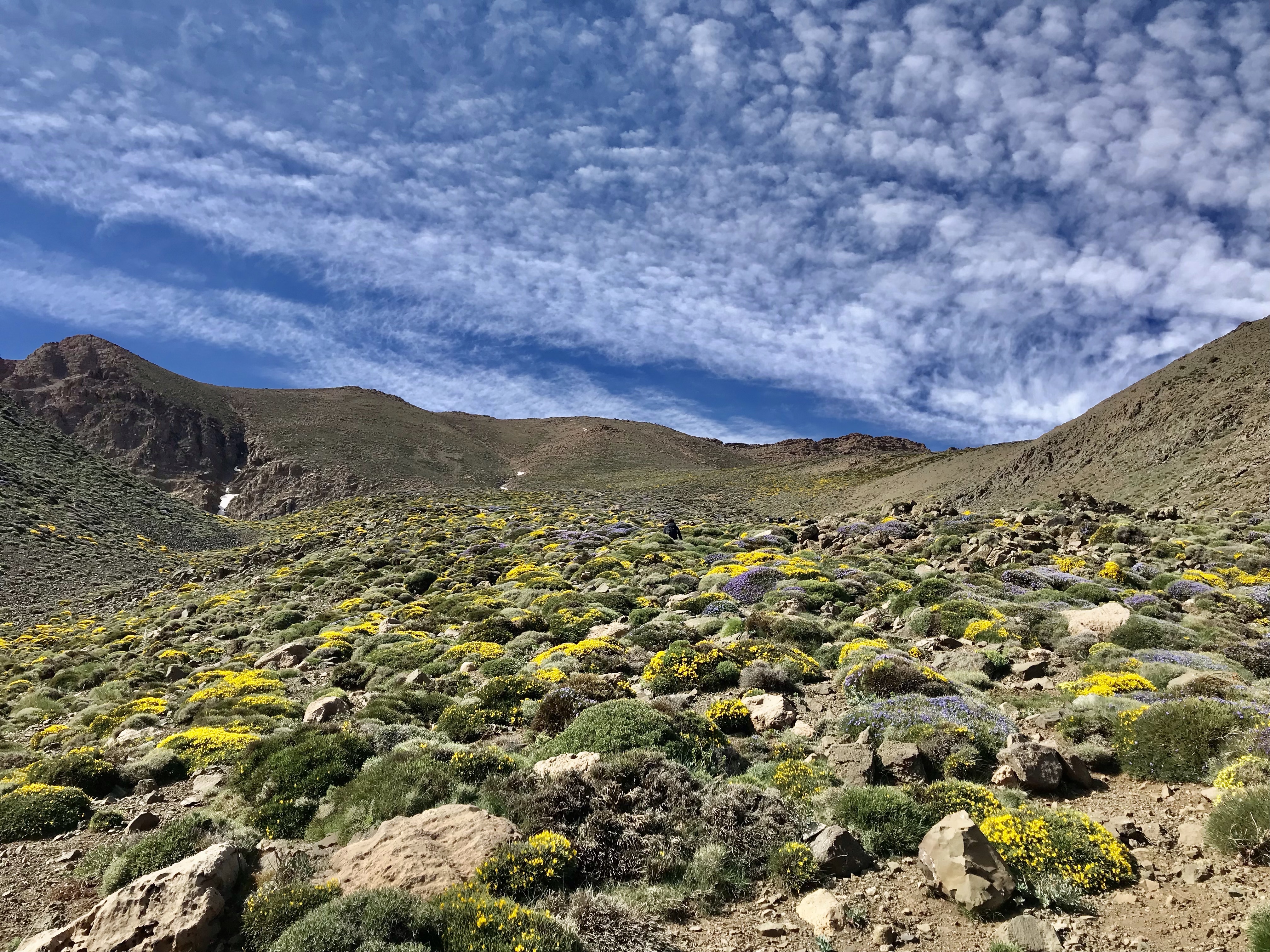

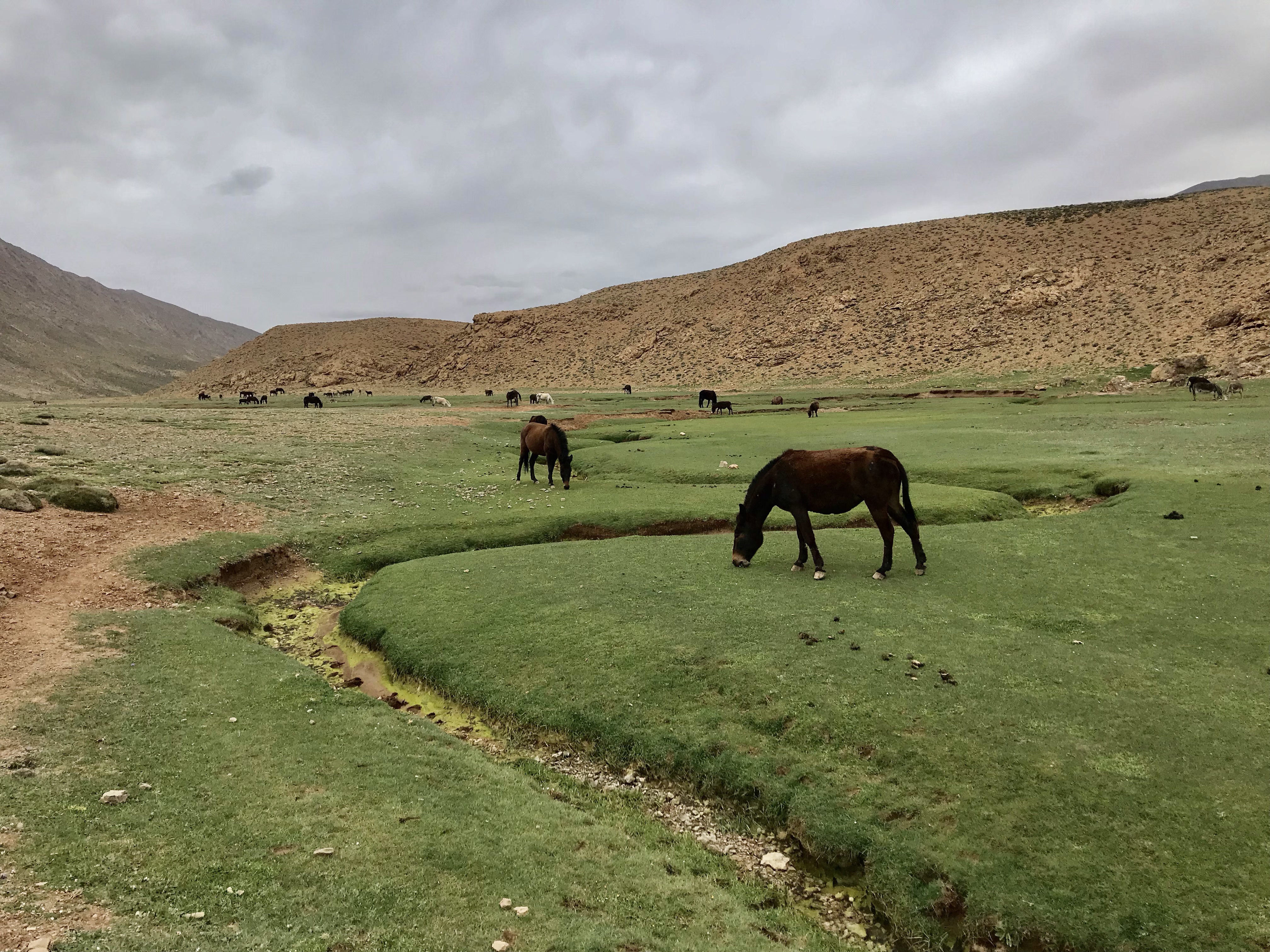
Depending on your pace, you will probably arrive fairly early at the Tarkedit refuge. After lunch, you will then have time to rest at the refuge or, on the contrary, extend the hike to the Ouendarass gorges.
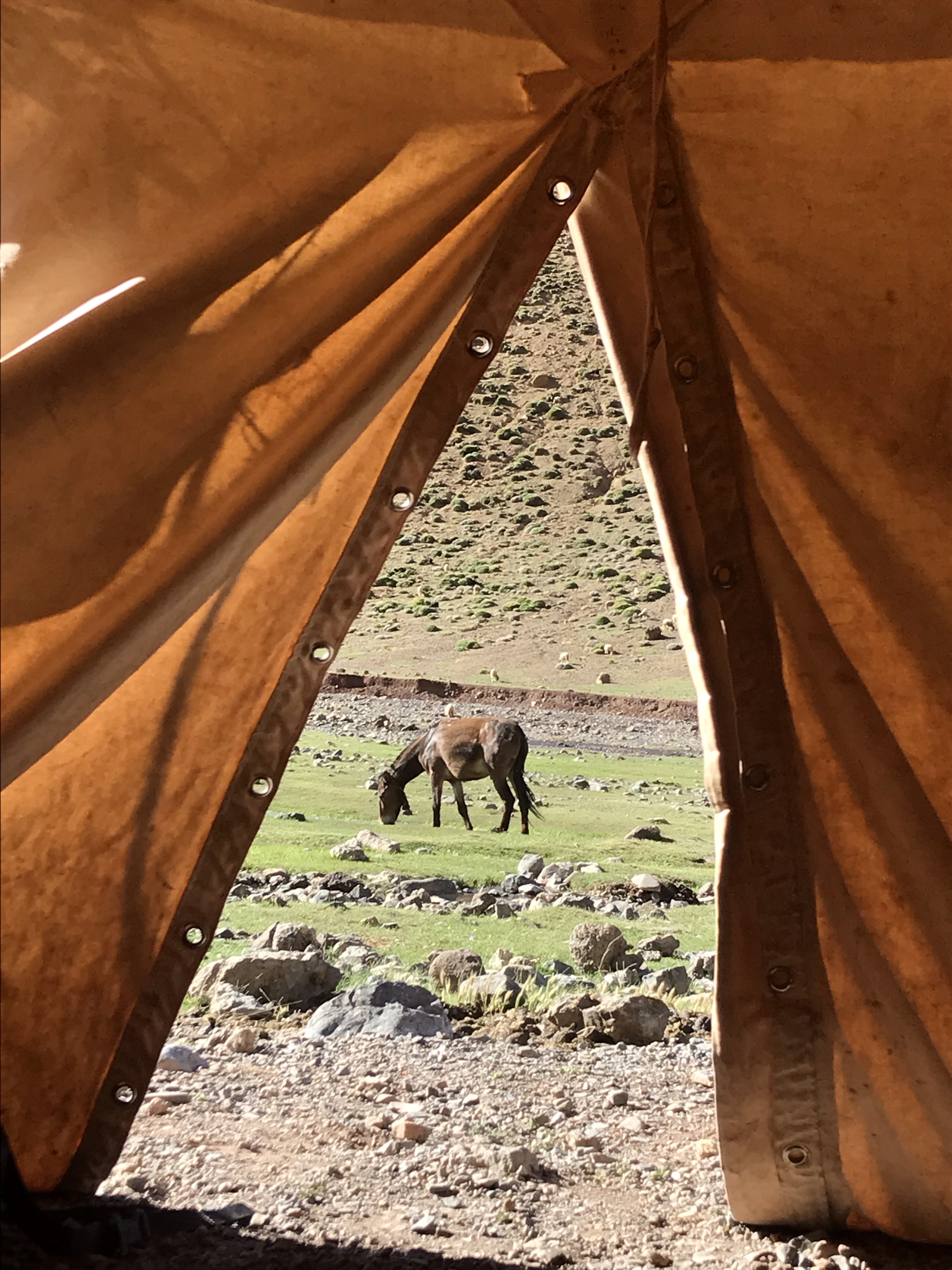
This extra walk crosses vast plains where mules graze. In addition, the trail follows the plateau and has very little elevation gain. Be careful, however: the Wikiloc track is misleading on this point and does not accurately reflect the relatively flat profile of this section.

DAY 7 – M’Goun ascent – from Tarkedit refuge to the Oued M’Goun gorges via the summit
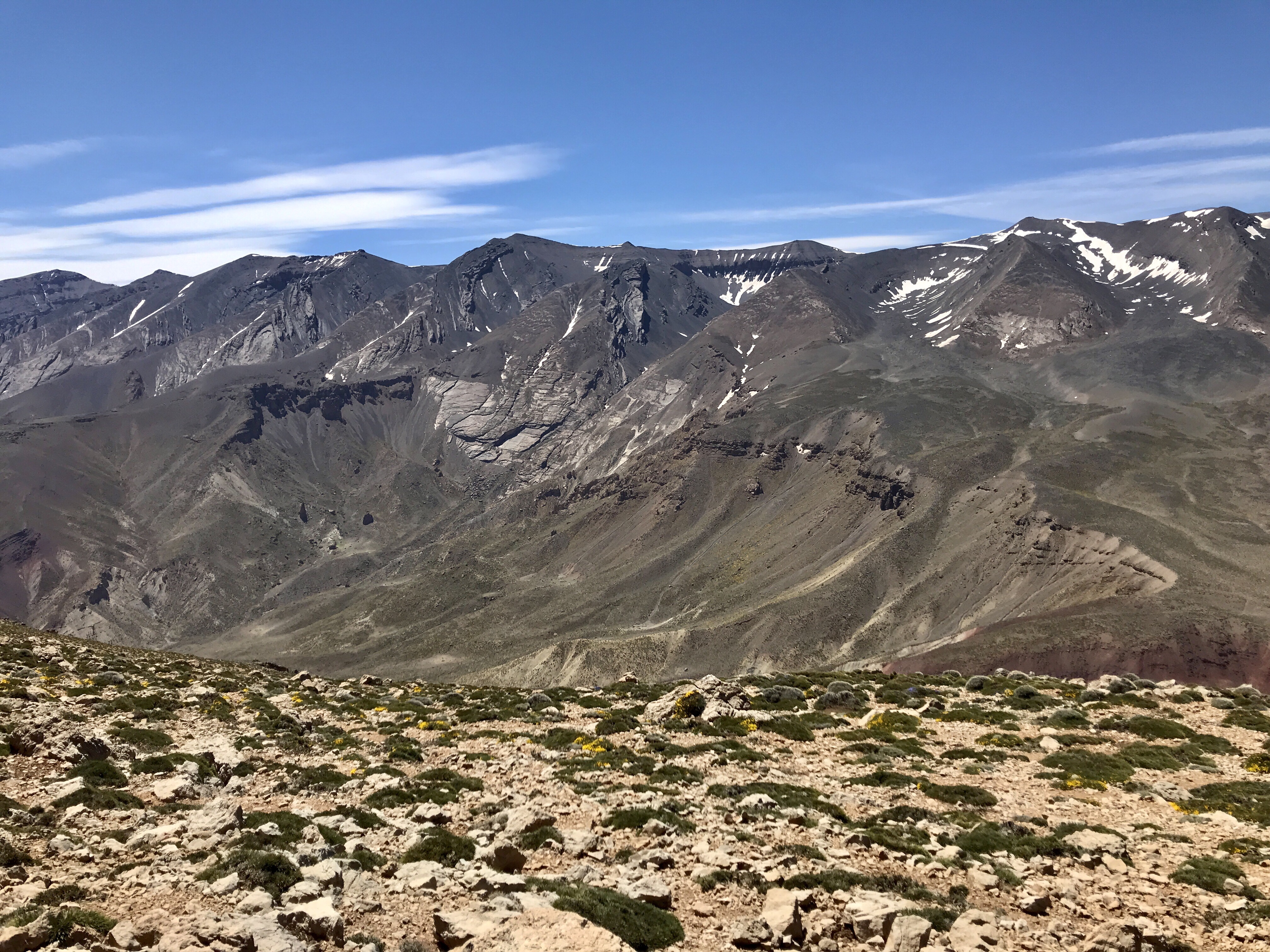
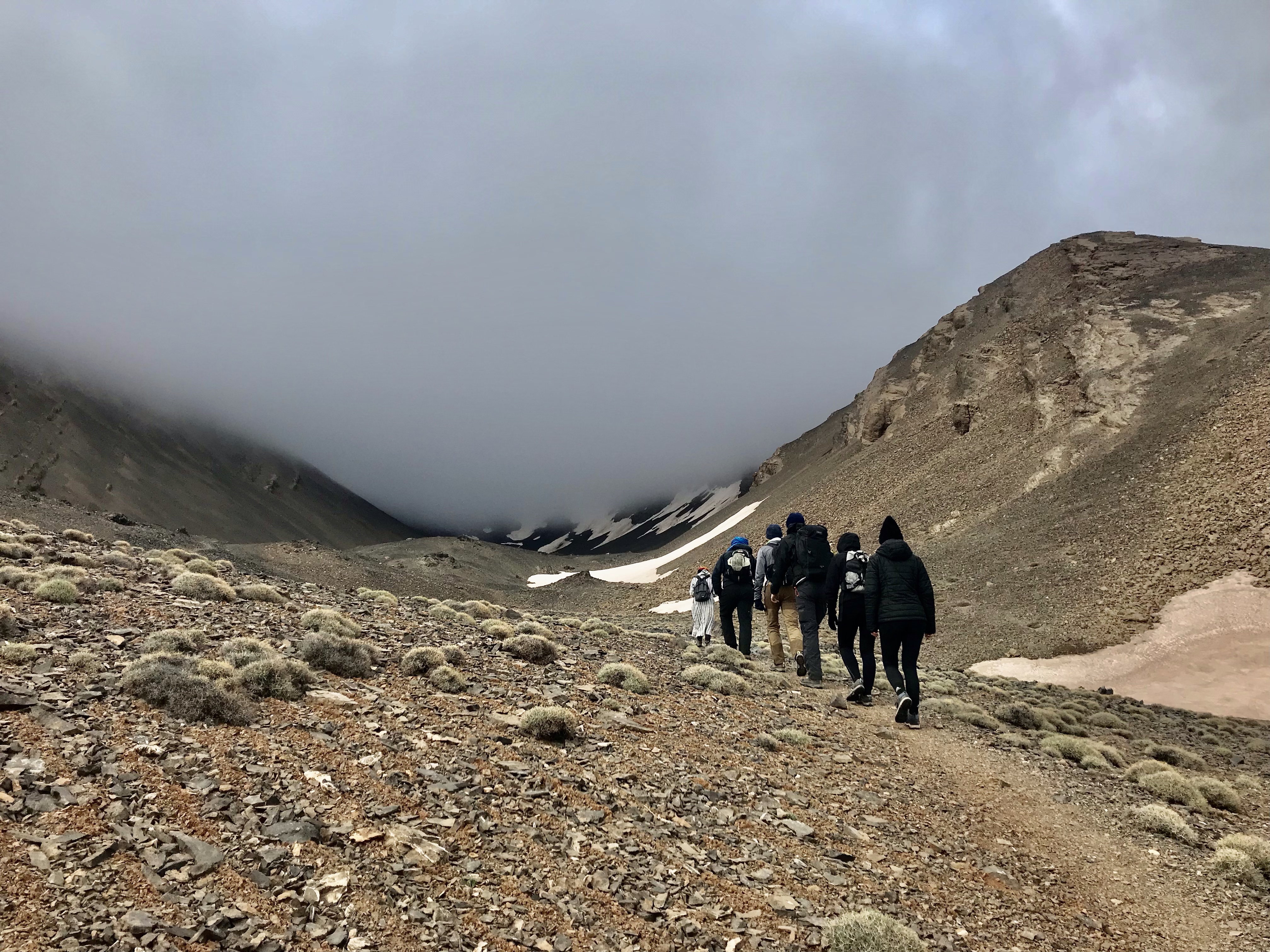
We set off at dawn, after a quick breakfast, toward the ridge leading to the summit of Jbel M’Goun. The ascent is steady and crosses a few snow patches, where hiking poles are welcome.
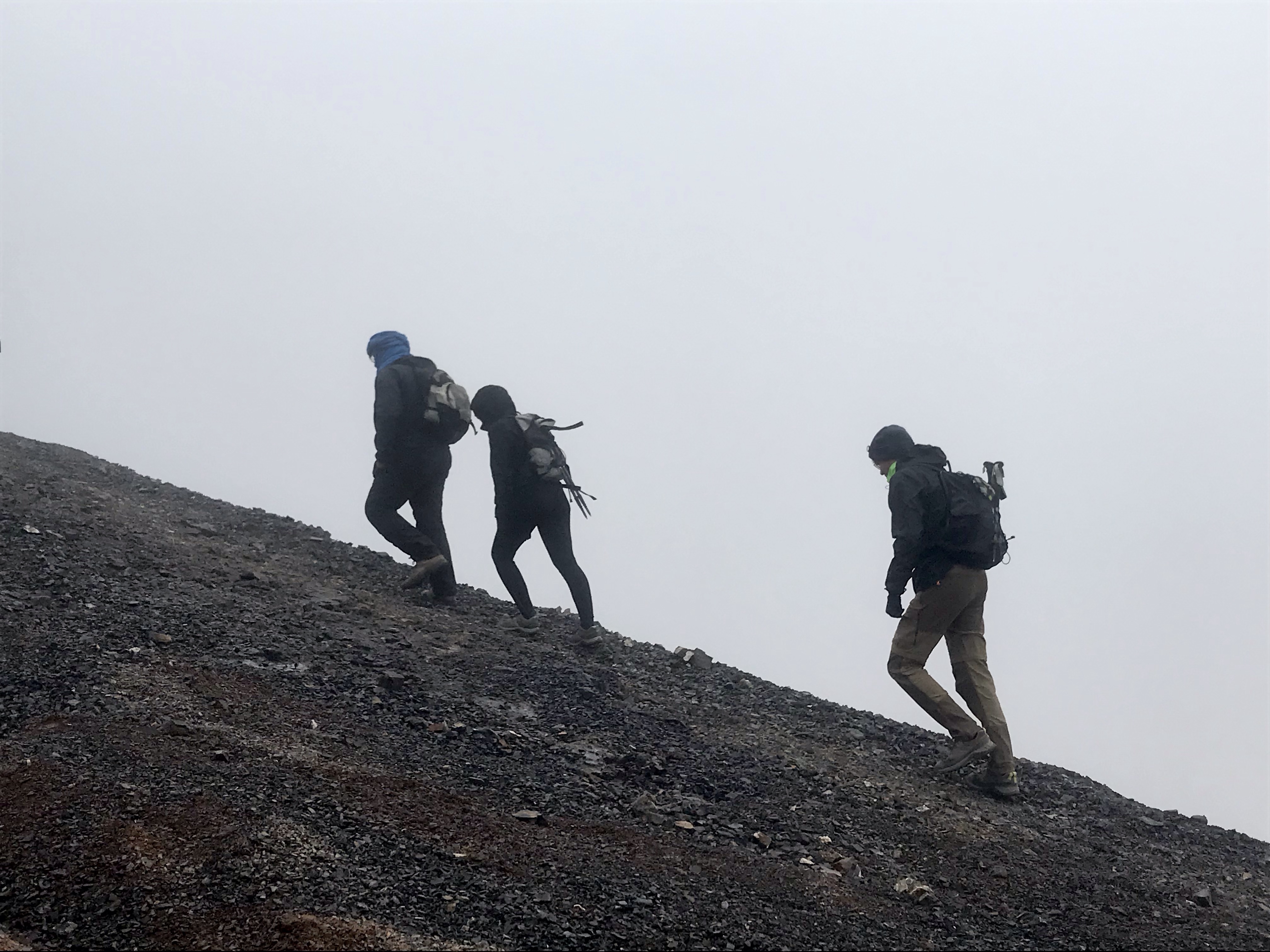
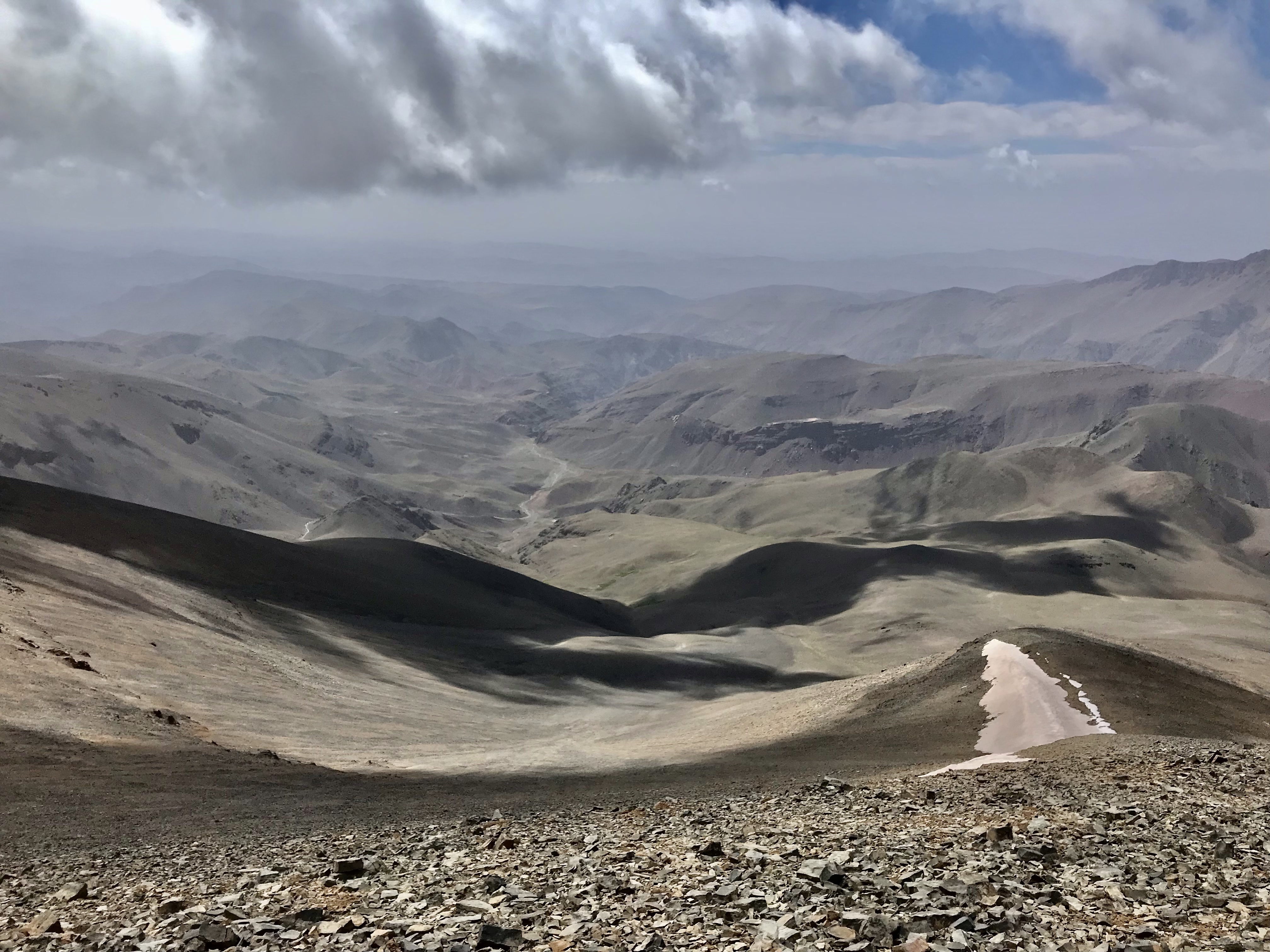
Once on the ridge, the wind blows so hard that you have to fight to stand upright. We then advance on a trail that goes up and down in the fog. Fortunately, the clouds eventually clear and reveal a magnificent panorama. On one side, the Ouarzazate plain stretches to the desert, with the reflection of the solar power plant in the distance. On the other, several rows of mountains follow one another as far as the eye can see.
The trail is well marked and the elevation gain remains relatively easy. On the other hand, the wind seriously complicates progress. We finally reach the summit of M’Goun, at 4,071 meters altitude ! We stop just long enough to take a few photos, before starting the descent to get sheltered.
Our guide then chooses the descent route according to the weather conditions. We take a steep, rocky slope, which we go down in zigzags. Lower down, the trail gradually becomes easier and joins the valley, amid varied landscapes.
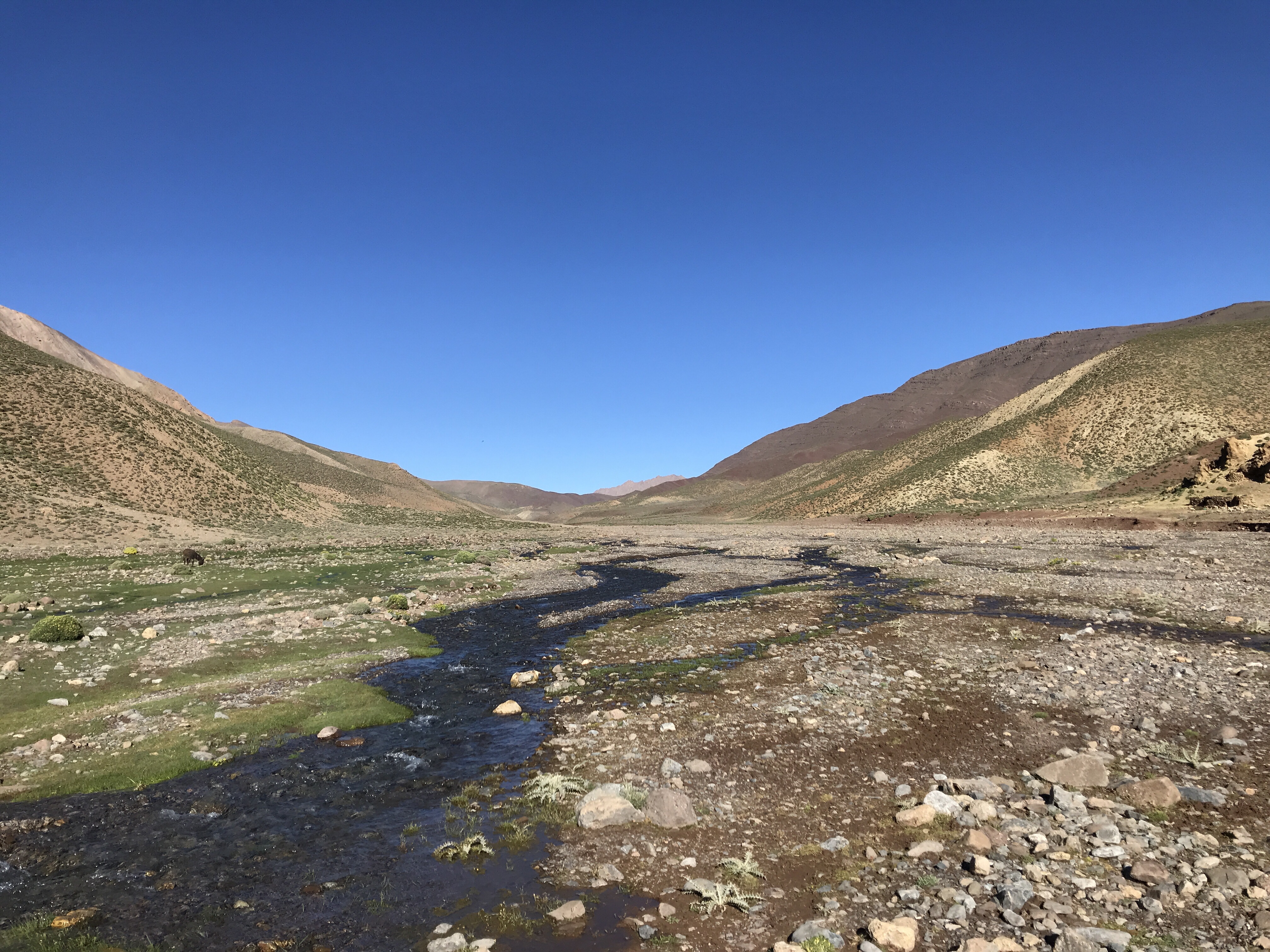
When we arrive, the muleteers and the cook have already set up the bivouac. We take advantage of the nearby river to cool off before dinner. Finally, after this long day in the mountains, we enjoy a well-deserved night.


DAY 8 – M’Goun ascent – Oued M’Goun gorges
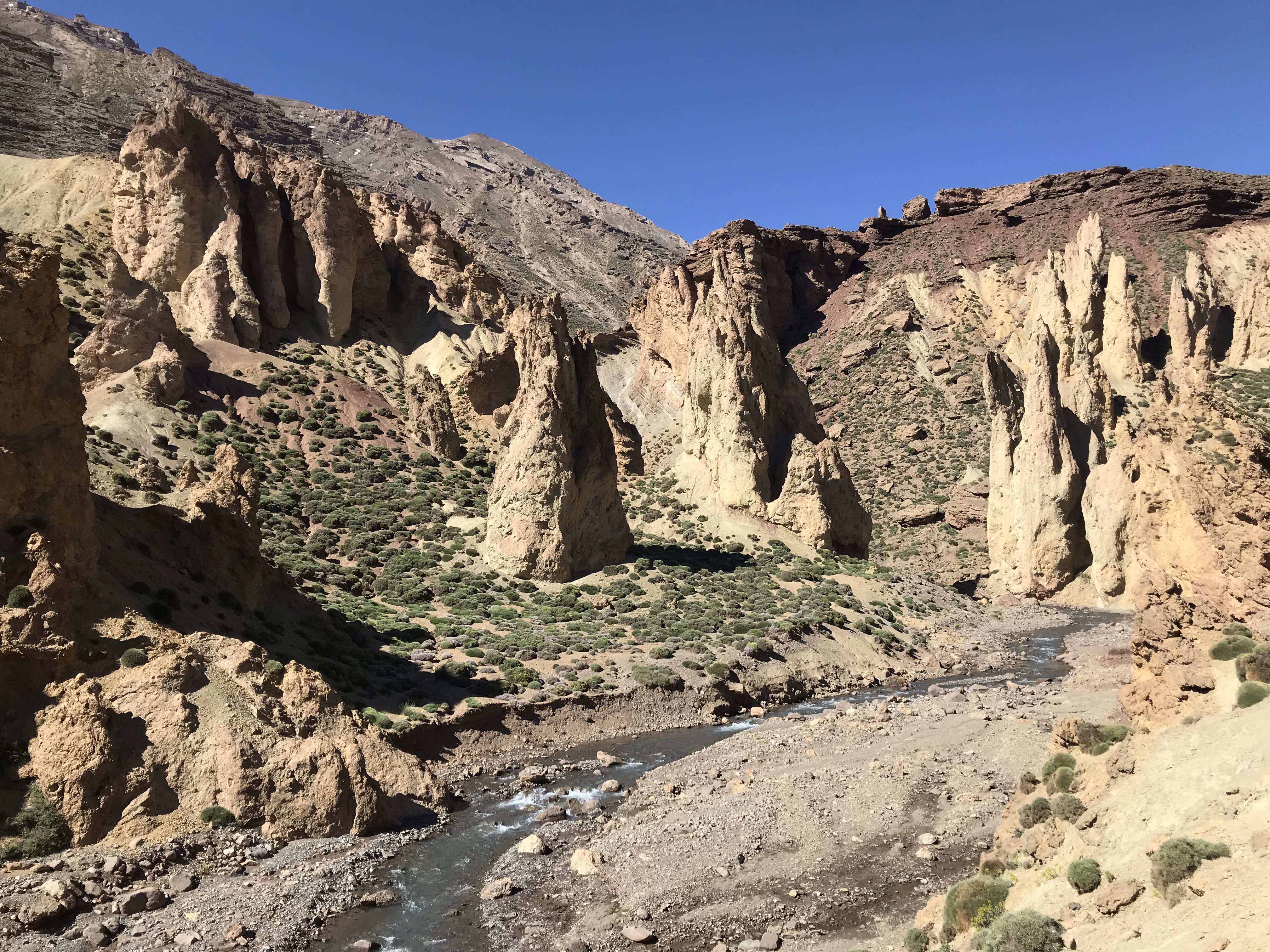
This last day of the M’Goun trek continues in the valley, on a path with moderate elevation gain. The trail crosses the river several times. Bring sandals or suitable sneakers for walking in the water. We arrive at noon at the end of the hike. After lunch, a bus takes us back to Arousse.

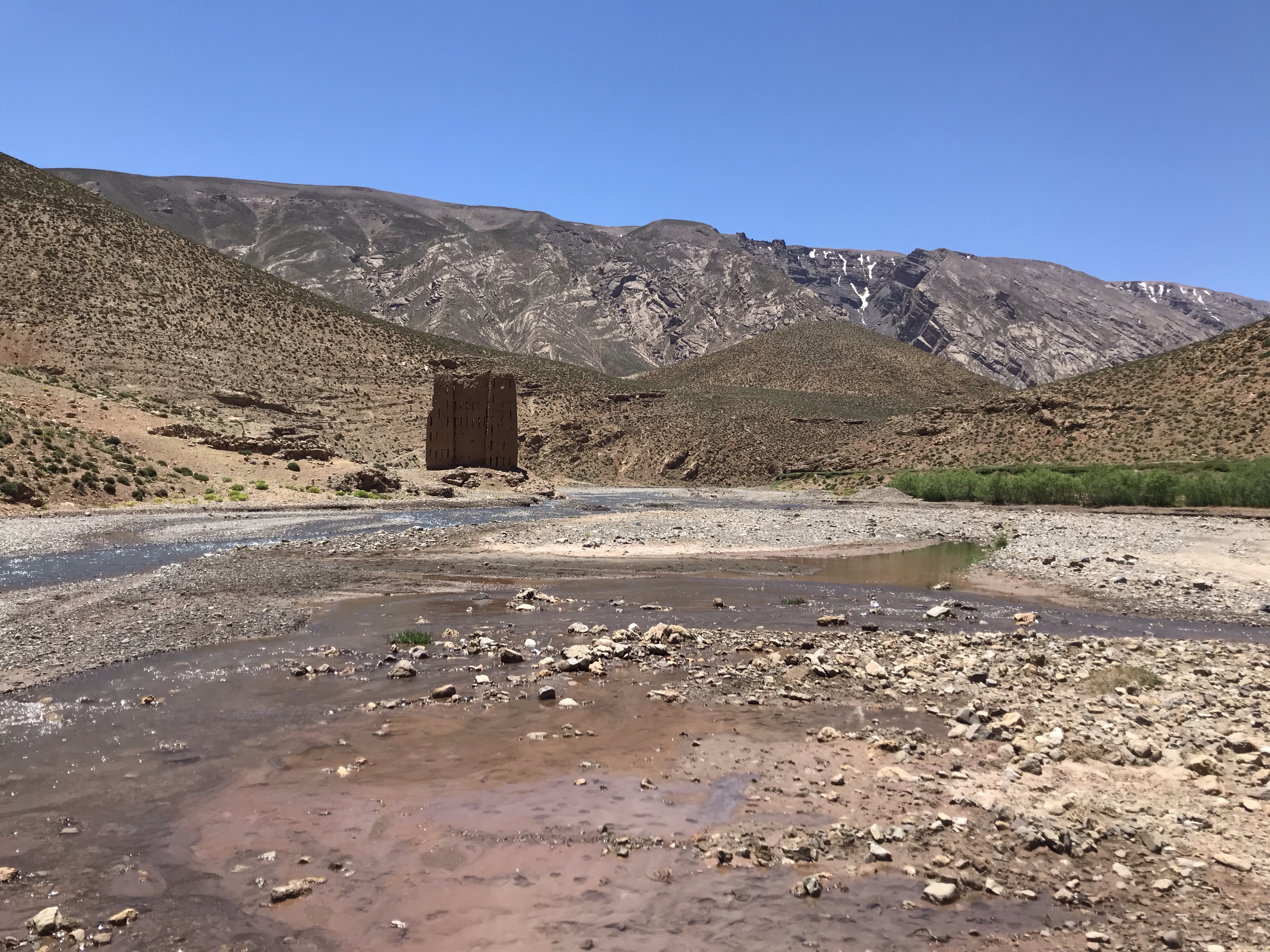
Accommodation in Aït Bouguemez
Kasbah du M’Goun: a beautiful kasbah ideally located on a promontory in the middle of the Ait Bouguemez valley. A mini-pool lets you cool off. The welcome and maintenance could be improved, but it remains the best option we found in that area. 340 MAD per person half board, with two people per room.
DAY 9 – Aït Bouguemez to Rabat
We leave before breakfast for the last hike of this High Atlas road trip: the climb to the agadir (granary) of Sidi Moussa, which offers an impressive panorama over the Aït Bouguemez valley. The walk is easy: allow about 1 hour round trip from Kasbah du M’Goun, for 3.4 km and 150 m elevation gain. The path is clearly indicated in the Maps.me app.

After breakfast, we hit the road and choose to return via Demnate, amid beautiful landscapes. We stop at the Iminifri bridge. A short, well-marked 30-minute walk lets you pass under this impressive natural bridge, which is worth the detour. Expect to meet people there, however.

From Iminifri, we head toward Rabat and stop one last time at a shop in El Kalaa des Sraghna, where several local products are sold.
It is also possible to reach Rabat via the road to Azilal, which is slightly better, very beautiful and shorter.
https://goo.gl/maps/GrDULSpZ3HjZwP9T6
Practical tips
The M’Goun ascent is a beautiful adventure in the heart of the Moroccan High Atlas. However, this high-mountain hike requires a minimum of preparation. Here are my practical tips, based on our experience of the 4-day, 3-night trek.
What is the best season to climb M’Goun?
The best period to do the M’Goun trek is generally between June and September (sometimes until October), when weather conditions are most favorable and there is less snow at altitude.
In June, however, snowfields may remain at higher elevations. This was the case during our ascent, when we crossed several snow patches before reaching the final ridge.
Can you climb M’Goun without a guide?
Yes, the M’Goun ascent is possible without a guide, but I recommend hiring one to support the local community and ensure greater safety. During our trek, despite the violent wind on the final ridge, Abdou was able to redirect us to a more sheltered route, which would have been difficult without his help.
How much does the M’Goun ascent cost?
In 2021, we were a group of 6 people and booked a 4-day, 3-night trek, including one night at Tarkedit refuge. The price included full board, our guide Abdou, a cook, 4 mules and their muleteers, who sometimes also acted as assistant guides. We paid 2,000 MAD per person, plus 500 MAD tip per person.
Contact our guide
We had already completed the Toubkal ascent with Abdou, and the M’Goun trek only confirmed his skills as a high-mountain guide in Morocco. Kindness, organization, honesty and safety were all there.
- Phone / WhatsApp: +212 672-156372
- Email: imlil36adg@gmail.com
What level is required for the M’Goun trek?
The M’Goun ascent requires good physical fitness and previous mountain hiking experience. The trek spans several days and includes long stages, with sometimes demanding ascents and descents.
Its summit rises to 4,071 meters. You must therefore also take altitude into account, as it can increase fatigue and cause symptoms related to acute mountain sickness.
To continue your trip in Morocco
If you have time to explore other regions, also discover my other Morocco guides. After living there for six years, I share all my tips with you to keep discovering the kingdom, between road trips, mountain range hikes, magnificent beaches and city visits.
Find the complete list of my articles devoted to Morocco on this page: Morocco.
Leave a Reply